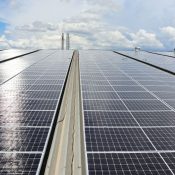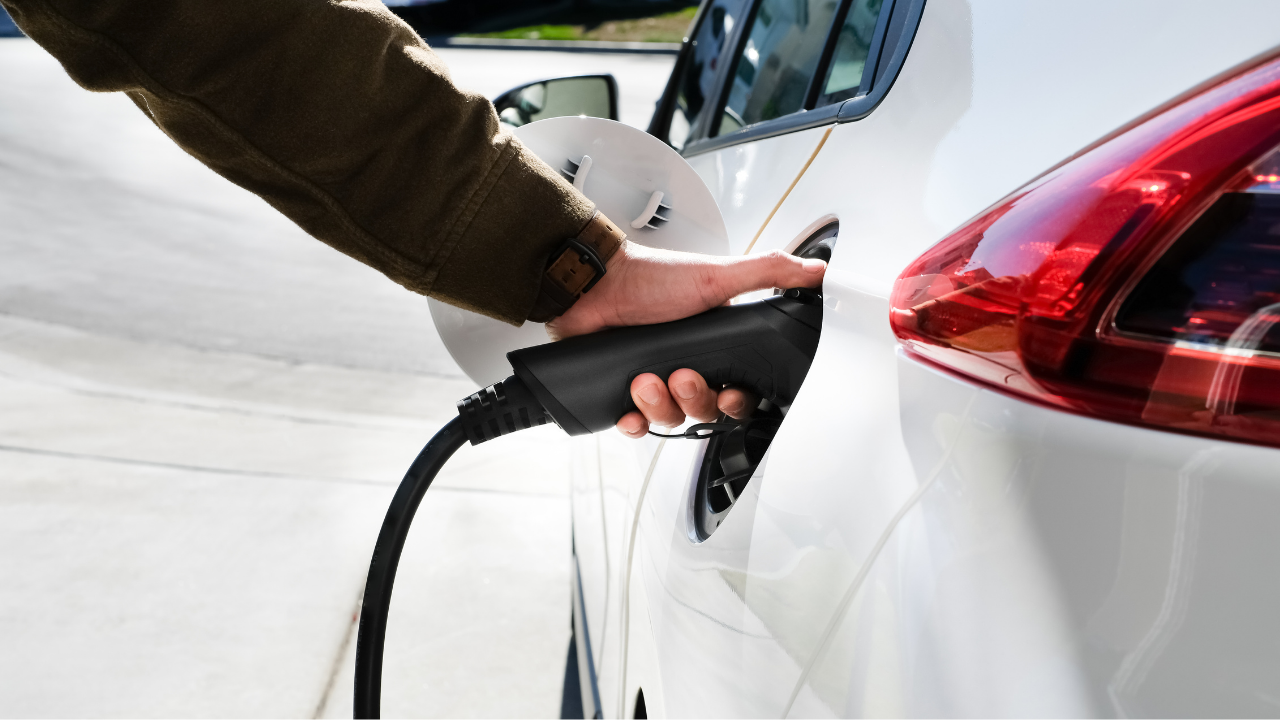
Yes, solar panels can power an electric vehicle (EV) full-time in an Irish household, provided the system is properly sized. A typical 6kWp solar panel system in Ireland can generate enough electricity to meet the yearly driving needs of most EV owners.
With a smart charger and possibly a home battery, you can charge your EV using mostly or entirely solar energy, helping you cut fuel costs and lower your carbon footprint. Thinking about if solar panels power an EV full time in an Irish household?
The good news is that it is not only possible but also practical. This blog will explain how solar EV charging works, what setup is needed, and how to get the best results from your solar system. It is a smart step towards cleaner, cheaper driving.
Why Powering Your EV with Solar Makes Perfect Sense?
Electric vehicles and solar panels are a powerful combination for Irish homeowners looking to reduce costs and emissions. Rather than relying on the unpredictable price of grid electricity or petrol, solar energy offers a consistent, long-term solution.
Drive for Free, Indefinitely
Once solar panels are installed, the electricity they generate is essentially free. That means every kilometre you drive using solar-charged electricity is one you didn’t have to pay for at the pump or through your electricity bill. Especially in Ireland, where electricity prices fluctuate frequently, this shields you from future increases and ensures predictable cost savings.
Real Zero-Emission Driving
Owning an EV doesn’t automatically mean you’re reducing your carbon footprint, particularly if you’re charging from grid electricity generated by fossil fuels. Charging directly from your rooftop solar means the energy used to drive is entirely emissions-free, making your EV truly green.
Optimising Solar Use at Home
Ireland’s Clean Export Guarantee allows you to sell unused solar power back to the grid, but the payment is far less than the retail cost of electricity. It is much more economical to use that power in your own home. Charging your car with surplus solar energy ensures that none of your generated power goes to waste, and it adds significantly to the return on your solar investment.
Control and Independence from the Grid
There is a unique satisfaction that comes from generating and using your own electricity. Watching your usage and knowing that your home and vehicle are powered without importing a single unit from the grid provides a strong sense of autonomy and sustainability.
How Does Solar EV Charging Work in Practice?
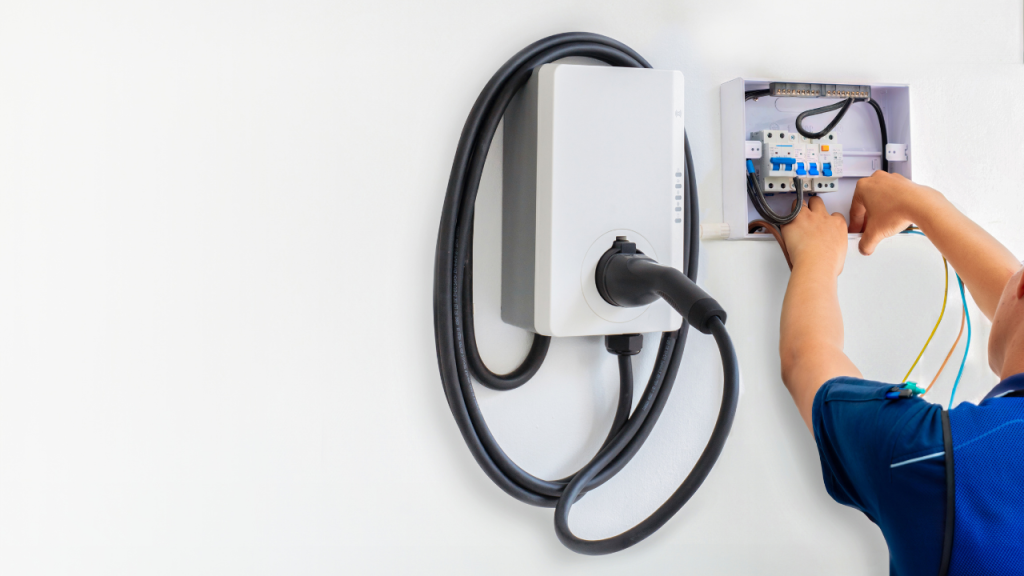
Solar EV charging is more sophisticated than just plugging your car into a socket. Your solar panels will prioritise supplying electricity to home appliances first. If there is excess electricity, it typically flows back to the grid unless there is a system in place to direct it elsewhere, such as into your EV.
Why a Standard Charger Isn’t Enough
A regular EV charger pulls a fixed power draw (typically 7.4kW) from the available supply. If your solar system is producing less than that, for example 2kW, the remainder will be pulled from the grid, which defeats the purpose of solar-only charging.
The Role of a Smart EV Charger
A smart EV charger bridges this gap by communicating with your home’s solar setup. It knows how much energy you are generating and whether there is any surplus. It uses this data to determine when and how to charge your EV using solar alone.
Here is how it all comes together:
- Current Transformer (CT) Clamp Monitoring: A clamp attached to your main electricity cable detects how much power is being imported or exported.
- Real-Time Data to the Charger: The charger receives this data and understands the flow of energy through your home.
- User-Selected Modes: You can then choose from different charging modes that prioritise solar energy.
What Charging Modes Are Available for EV Owners?
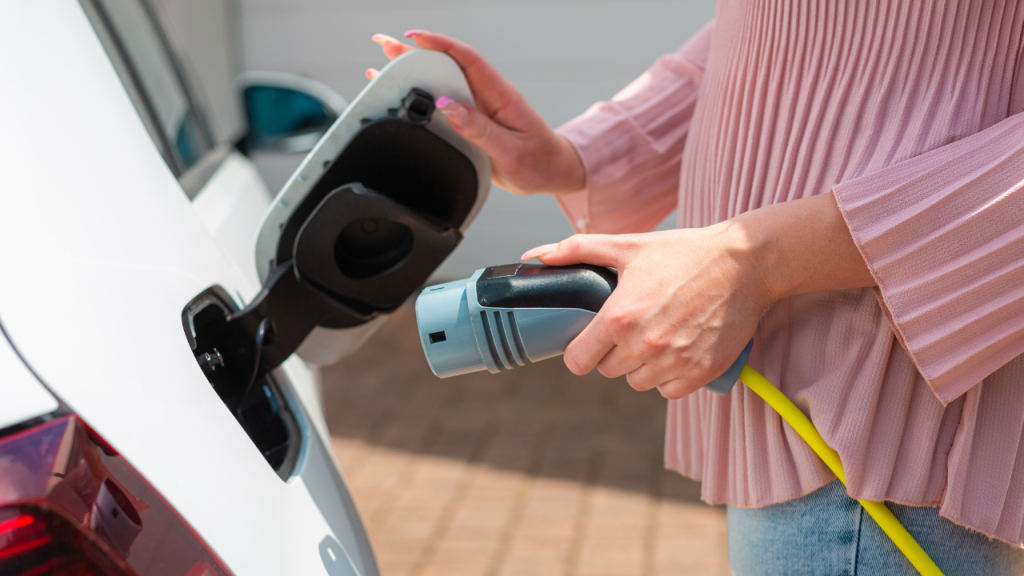
Smart chargers come with eco-friendly options that allow you to tailor charging to your solar output:
Solar-Only Mode
In this setting, your EV charges only when a minimum level of excess solar energy is available, usually starting at around 1.4kW. If solar production dips, such as when a cloud passes over, the charger pauses until the surplus returns. This ensures the car is charged using 100 percent solar energy and nothing else.
Eco-Boost Mode
This blended mode allows you to charge a bit faster by supplementing solar power with some grid energy. It still prioritises your free solar energy but adds grid electricity to maintain a more consistent charging rate, such as 3.6kW. It is useful when you need the car ready but still want to reduce costs.
Fast or Boost Mode
This mode overrides solar prioritisation and pulls the full 7.4kW from both sources to charge your EV as quickly as possible. It is ideal when time is short, although it comes with a higher cost.
What You’ll Need for a Complete Solar EV Charging Setup?
Creating a truly solar-powered EV charging station at home involves three main components.
1. Solar PV System
The foundation of your setup is a photovoltaic (PV) system. A 6kWp solar array, which is about 14 to 16 panels, is common in Ireland and generates around 5,100 to 5,400 kWh annually.
Let’s run some numbers:
- EVs typically deliver 5 to 6 kilometres per kWh.
- The average Irish motorist covers about 17,000 kilometres annually.
- This means you will need around 2,800 to 3,400 kWh per year to run the car.
A standard home solar system can produce more than enough electricity to power your EV for an entire year, with energy left over for household use.
2. Smart EV Charger
This is the central control system of the setup. Models such as the Zappi charger are built with solar integration in mind. They manage the energy flow and ensure you are getting the most benefit from your solar generation.
3. Battery Storage (Optional but Highly Beneficial)
If your lifestyle doesn’t allow you to charge during the day when the sun is shining, a home battery can store solar energy for use later in the evening.
- Without a battery: You can only charge your EV while solar production is active.
- With a battery: Solar energy generated during the day is stored, and your EV can be charged at night using that stored power.
This setup allows you to charge your EV even when the sun is not shining, using electricity you generated earlier in the day.
The Financial Angle: Costs, Grants, and Real Savings
To manage expenses you have look after following things:
Fuel Savings Over Time
Here is a breakdown for an average Irish driver:
- Petrol car: Driving 17,000 kilometres annually with fuel at €1.80 per litre may cost over €1,600 each year.
- EV charged from the grid: At €0.35 per kWh, the same distance might cost about €1,070 annually.
- EV charged with solar: The cost drops to €0 per year in electricity charges.
This means you could save over €1,600 each year by switching from a petrol vehicle to a solar-powered EV.
Available Grants
The Sustainable Energy Authority of Ireland (SEAI) offers financial support to help offset installation costs:
- Solar PV Grant: Up to €1,800 is available for systems with battery storage. Grants for panel-only installations are higher, although these terms may change.
- EV Home Charger Grant: You can receive €300 towards the purchase and installation of a smart home EV charger.
These grants can be used together, significantly reducing your upfront investment and improving your return on investment.
Conclusion
Powering your EV full time with solar panels in an Irish household is not only possible, it’s a smart and sustainable choice. With the right solar setup, a smart charger, and optional battery storage, you can enjoy cleaner driving and major savings on energy costs.
If you’re ready to take the next step, our Going Solar team is here to help. Whether you’re just starting out or want expert advice on your setup, we’ll guide you through everything you need to know. Get in touch today and let’s explore if solar can fully power your EV.