Most people don’t wake up one morning and decide to go solar. It tends to build gradually. You notice the electricity bills creeping up. You hear a neighbour mention their panels. You start wondering whether all that roof space is going to waste.
If any of that sounds familiar, you’re probably closer to being ready than you think. The five signs below are the same patterns we see again and again with homeowners and business owners across Dublin and Leinster who go on to install solar PV systems. If three or more apply to you, it’s worth getting a proper assessment done.
Between SEAI grants of up to €1,800 for homes (and up to €162,600 for commercial properties), 0% VAT on solar installations, and electricity savings of 60 to 70%, the financial case has never been stronger. But timing still matters, and not every property is equally suited. Here’s how to tell if yours is.
Sign #1: Rising Electricity Bills Keep Catching You Off Guard
This is usually the trigger. You open the bill, wince, and think there has to be a better way. If your household electricity spend has been climbing steadily over the past two or three years, solar PV can cut that by 60 to 70% from the day the system goes live.
For businesses, the numbers are even more compelling. A 20kWp commercial system can produce around 17,300 kWh per year, saving roughly €6,000 annually. Larger setups (50kWp) can bring in approximately €12,000 per year. If you’ve been looking at ways to cut electricity costs with solar panels, those savings start from day one and compound over the 25-plus-year lifespan of modern panels.
The sweet spot is when your daytime electricity usage is high. If someone is usually home during the day, or if your business operates during daylight hours, you’ll use more of what your panels generate directly. That’s where the biggest savings come from.
Sign #2: Sustainability Is Becoming Part of How You Operate
For homeowners, it might be as simple as wanting to do your bit. For businesses, it’s increasingly about meeting ESG requirements, satisfying customer expectations, or future-proofing against tighter regulations.
Either way, if you’ve already started thinking about your carbon footprint (even casually), solar is one of the most practical steps you can take. It’s not a token gesture. A properly designed system genuinely reduces your reliance on fossil fuels and contributes to Ireland’s target of generating 70% of electricity from renewables by 2030.
Going Solar has completed over 8,000 residential installations and hundreds of commercial projects across Ireland, the UK, and Europe. The demand isn’t slowing down. If anything, the businesses and homeowners who move early tend to benefit most, both financially and in terms of increased property resale value when the time comes to sell.
Sign #3: Suitable Roof Space With Good Sun Exposure
Not every roof is ideal for solar, but most are better than people expect. Ireland gets enough daylight (yes, even with the clouds) to make solar PV work well. Panels generate electricity from light, not heat, so our climate is perfectly fine.

Here’s what makes a roof well suited for panels:
- South, south-east, or south-west facing orientation gives the best output.
- Minimal shading from trees, chimneys, or neighbouring buildings during peak daylight hours.
- Enough unobstructed space for the number of panels your system needs.
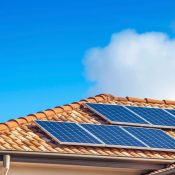
- Structurally sound, whether slate, tile, flat, or metal deck roofing.
If you’re not sure about your roof, that’s exactly what a site survey is for. Going Solar’s engineering team will assess orientation, shading, and structural suitability before recommending a system. They use German-engineered Schletter mounting systems that cover virtually every roof type found in Ireland, from traditional slate to flat commercial rooftops and metal farm sheds, so there’s rarely a roof that can’t work.
What About East or West Facing Roofs?
They still work. East and west orientations produce less than south-facing setups, but the difference isn’t as dramatic as people assume. A good installer will design the system around your actual roof layout and electricity usage patterns, and in many cases an east-west split can actually spread generation across more of the day.
Sign #4: Long-Term Plans for Property Ownership
Solar panels are a long-term investment. Residential payback is typically around five years, and commercial systems pay for themselves in four to seven years. After that, it’s essentially free electricity for the remaining 20-plus years of the panel lifespan.

If you’re planning to stay in your home or hold onto your commercial property for the foreseeable future, you’ll capture the full return. But even if you sell sooner, solar adds measurable value to the property and improves your BER rating, both of which matter to buyers.
For farmers, the equation is different again. The TAMS 3 grant covers 60% of eligible costs (up to a ceiling of €90,000), making it one of the most generous solar incentives available in Ireland. If you have farm buildings with high energy consumption and a valid herd or flock number, the financial case is hard to argue against.
Sign #5: Grant Funding Is Still Available (and It Won’t Last Forever)
Right now, Irish homeowners can claim up to €1,800 through the SEAI Solar Electricity Grant. That’s on top of 0% VAT on the full installation. For commercial properties, the Non-Domestic Microgen Grant goes up to €162,600.
These grants won’t be around forever. The government had signalled plans to reduce the domestic grant by €300 per year, with the scheme ending entirely by 2029. While the €1,800 cap has been held for 2026, there’s no guarantee that continues into 2027.
Going Solar handles the entire grant application process on your behalf. That includes SEAI paperwork, ESB Networks registration, and all the documentation needed to get your grant paid into your account after installation. It’s one of the things their customers mention most in reviews. The less hassle involved, the easier it is to actually get it done.
What Happens Next if You’re Ready?
If three or more of those signs rang true, the next step is straightforward. Get a proper consultation. Going Solar offers free assessments where their engineering team reviews your property, designs a custom system, and gives you a clear breakdown of costs, savings, and grant entitlements.
With 8,000-plus installations behind them, ISO 9001 certification, and SEAI-approved installer status, they’ve got the track record to back it up. Most residential installations are completed in a single day, and their after-sales support team stays with you long after the panels go on. Get in touch on (01) 485 3738 or request a free quote at goingsolar.ie to find out exactly what solar could do for your property.