If you’ve bought an electric vehicle or you’re planning to, one of the first questions that comes up is how to charge it at home without paying a fortune. The good news is that the SEAI Home EV Charger Grant is still running in 2026, and it can knock a serious chunk off the installation cost.
Here’s the short version. The SEAI currently offers up to €300 towards the purchase and installation of a home EV charge point for eligible homeowners. You apply online through the SEAI portal, use a registered electrician, and the grant is paid to you directly after the job is signed off.
Below we’ll walk through the exact rates, who qualifies, how the application works step by step, and how homeowners are pairing the charger with solar PV to cut running costs even further.
What Is the SEAI EV Charger Grant?
The SEAI Home EV Charger Grant is a government-backed scheme run by the Sustainable Energy Authority of Ireland. It’s designed to make home charging more affordable and to speed up the switch away from petrol and diesel cars.
It covers a portion of the cost of buying and installing a dedicated home charge point at your property. It does not cover the cost of the electric vehicle itself, and it doesn’t cover portable plug-in cables or three-pin adapters.
- Grant amount: up to €300 per qualifying home
- Applies to the purchase and installation of a fixed home charger
- Paid directly to the homeowner after the works are completed and verified
- One grant per eligible property, not per person
So even if you move house or buy a second EV down the line, the grant is tied to the property, not to you personally. That’s an important detail people often miss.
Who Qualifies for the Grant in 2026?
Eligibility is straightforward, but every box needs to be ticked before SEAI will approve a payment. Miss one and the application gets bounced back.
Property Requirements
The property must be a private home in the Republic of Ireland with off-street parking. That means a driveway, garage, or private parking bay where the charger and cable are not blocking a public footpath.
- Owner-occupied home, or landlord-owned rental property
- Off-street parking with a safe route from the charger to the car
- Property has not previously claimed the EV charger grant
- Home has an MPRN number and a live electricity connection
Vehicle and Applicant Requirements
You don’t need to own the EV on the day you apply, but you do need to prove intent. Most applicants supply either a vehicle registration or a signed order form from the dealer.
- Applicant is the owner of the property, or has written permission from the owner
- An eligible battery electric or plug-in hybrid vehicle is owned or on order
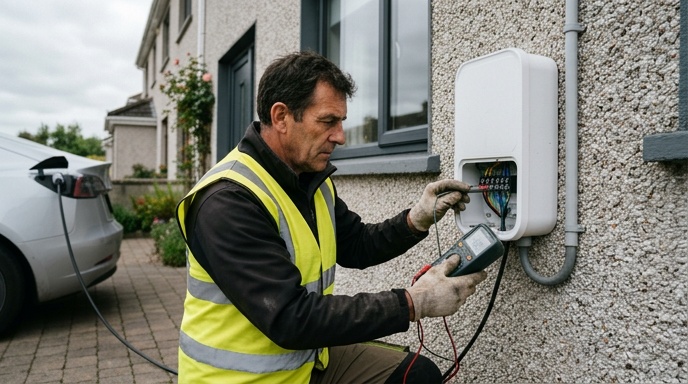
- Installation is carried out by a Safe Electric registered electrician
How Much Does a Home EV Charger Actually Cost?
Before you factor in the grant, a typical home charger install in Ireland lands somewhere between €900 and €1,500. The exact figure depends on the charger model, the cable run from the fuse board, and whether any consumer unit upgrades are needed.
Here’s a rough breakdown of what you’re actually paying for.
- The charger unit itself: usually €500 to €900 depending on brand and features like tethered cable, app control, or load balancing
- Electrician labour: typically €200 to €400 for a standard install
- Cable, mounting, and consumables: €50 to €150
- Optional extras: RCBO upgrade, longer cable run, or an outdoor pedestal mount
After the €300 SEAI grant, most homeowners end up paying between €600 and €1,200 out of pocket. Not a small sum, but it usually pays for itself in fuel savings inside the first year of EV ownership.
How to Apply for the SEAI EV Charger Grant Step by Step
The application is done entirely online through SEAI’s portal. It’s not complicated, but the order matters. Do it in the wrong sequence and you can end up disqualifying yourself.
Step 1: Gather Your Documents
Before you log in, have these ready to upload.
- Proof of EV ownership or a signed order from the dealer
- Your MPRN number, which you’ll find on any recent electricity bill
- Proof of property ownership or written landlord consent
- A photo of the intended charger location
Step 2: Submit the Application Online
Head to the SEAI website and complete the online form. You’ll get an application reference number by email within a few working days. Do not book your electrician until you have this reference. Work started before approval is not eligible.
Step 3: Get the Charger Installed
Once approved, you have six months to complete the installation. Use a Safe Electric registered electrician who will handle the certification and issue you a completion cert. Keep every invoice and receipt.
Step 4: Claim Payment
Log back into the SEAI portal, upload your invoices, completion cert, and photos of the finished install. Payment usually lands in your bank account within four to six weeks of a clean submission.

Combining Your EV Charger With Solar PV
This is where things get interesting for homeowners who want to cut running costs to the bone. Charging your EV off solar power costs you almost nothing per kilowatt-hour, compared to roughly 30 to 40 cents on the day-rate grid tariff.
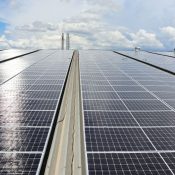
Many homeowners are now applying for the EV charger grant at the same time as the SEAI Solar Electricity Grant, which pays up to €1,800 towards a solar PV system. The two grants are separate schemes, so you can claim both.
- A 4kWp solar array typically generates around 3,600 kWh per year in Ireland
- An average EV uses about 3,000 to 4,000 kWh per year for typical mileage
- Pair the two and much of your driving becomes essentially free during daylight hours
- Smart chargers can be set to only pull power when solar production is high
If you’re planning to make the switch to electric anyway, doing both together is usually the smartest move financially. Our team can walk you through home solar options alongside the charger install to see what makes sense for your roof and driving pattern.
Common Mistakes That Delay or Void the Grant
We see the same slip-ups again and again on grant applications. Avoid these and you’ll get paid without drama.
- Starting the installation before receiving SEAI approval, this voids the claim outright
- Using an electrician who isn’t Safe Electric registered
- Applying for a property that has already claimed the grant under a previous owner
- Uploading blurry photos or invoices without VAT details
- Trying to claim for a portable plug-in cable rather than a fixed charge point
- Forgetting to include the MPRN, which delays everything by weeks
Most reputable EV installers in Ireland will walk you through the paperwork, and some will handle the entire application on your behalf as part of the service. That takes the headache out of it entirely.
Is the EV Charger Grant Worth It?
For anyone driving an electric or plug-in hybrid vehicle, a dedicated home charger is essentially non-negotiable. Charging off a standard three-pin socket is slow, inefficient, and can be a fire risk over time.
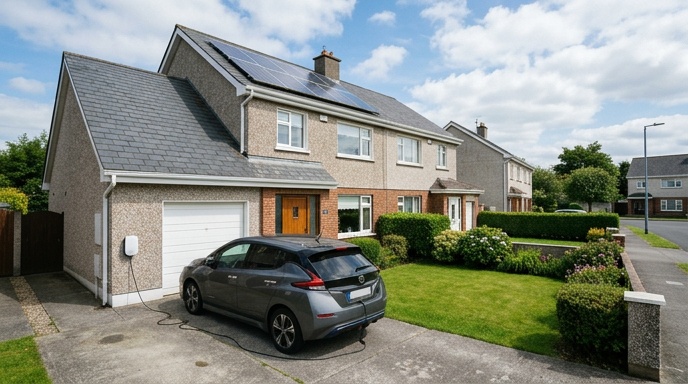
With the grant knocking €300 off the price and installation typically done in a single morning, there’s very little reason to delay. If you’re combining it with solar, the payback picture gets even better.
If you’d like a straight-talking quote for a charger, a solar system, or both together, contact Going Solar and get a free quote. Our expert installers will map out exactly what your property qualifies for.