If you’re getting solar panels for your home, the inverter is one of the most critical decisions you’ll make. It doesn’t get the same attention as the panels themselves, but without the right inverter, even the best solar panels won’t perform as they should. It’s the piece of kit that converts the DC electricity your panels produce into the AC electricity your house actually uses.
Choosing the right solar inverter for your home comes down to matching the inverter type and size to your panel system, your household electricity usage, and whether you plan to add battery storage now or later. For most Irish homes, a hybrid inverter paired with a system between 3kWp and 6kWp offers the best balance of performance and future flexibility. String inverters remain a solid, cost-effective option for straightforward roof layouts without shading issues.
Getting this decision wrong can mean lost energy, reduced savings, and headaches down the road. Getting it right means your system runs efficiently for 10 to 15 years before the inverter needs replacing, while your panels keep working for 25 years or more. Here’s what you need to know before you decide.
What Does a Solar Inverter Actually Do?
Solar panels generate direct current (DC) electricity. Your home runs on alternating current (AC). An inverter bridges that gap, converting DC to AC so your lights, appliances, and heating can use the power your roof is generating.
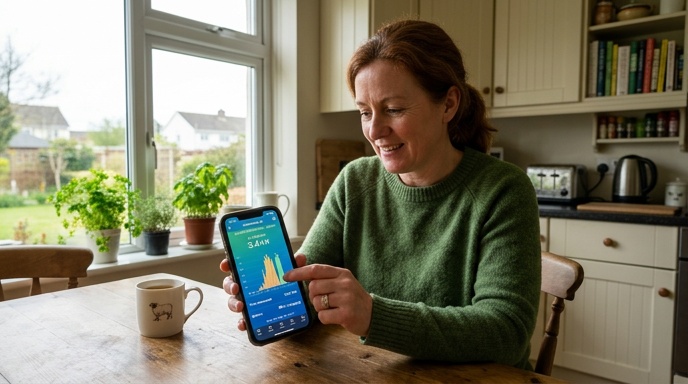
But modern inverters do more than simple conversion. They monitor your system’s performance, communicate with your utility meter, manage how electricity flows between your panels, your home, the grid, and (if you have one) your battery. Most good inverters come with a monitoring app so you can see exactly what your system is producing and consuming in real time.
Think of the inverter as the brain of your solar system. The panels are the muscle, but the inverter decides how that energy gets used.
What Are the Different Types of Solar Inverter?
String Inverters
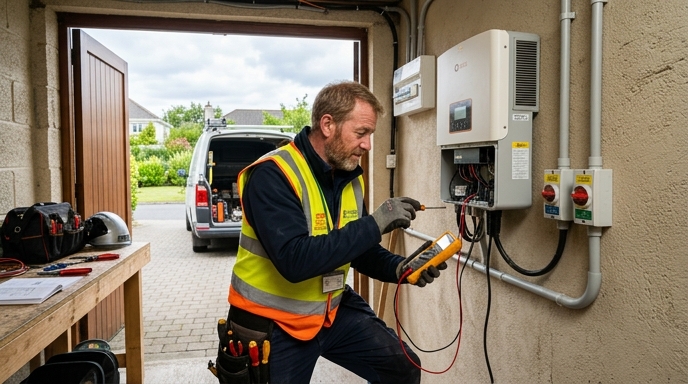
String inverters are the most established type. All your panels connect in a series (a “string”), and the DC power flows to a single inverter, usually mounted on a wall in your utility room or garage. They’re reliable, well-proven, and typically the most affordable option.
One drawback is that if one panel in the string underperforms (due to shading from a chimney or tree, for instance), it can drag down the output of the entire string. For homes with simple, unshaded south-facing roofs, this rarely matters. For more complex setups, it’s worth considering alternatives.
Microinverters
Microinverters sit behind each individual panel, converting DC to AC right at the source. Each panel operates independently, so shading on one panel doesn’t affect the others. They’re excellent for roofs with multiple orientations or partial shading problems.
They cost more upfront than string inverters, and because they’re on the roof, maintenance access can be trickier. But panel-level monitoring is a genuine benefit if you want granular data on how each panel performs.
Hybrid Inverters
Hybrid inverters are becoming the most popular choice for Irish homeowners, and for good reason. They work like a string inverter but have a built-in battery connection, so you can add storage now or retrofit it later without replacing the inverter. This is a smart move if you’re not ready to invest in a battery today but might want one in a year or two as prices continue to fall.
Both the Huawei SUN2000 series and Solis inverters that Going Solar installs offer hybrid capabilities, giving homeowners that flexibility without compromising on quality or monitoring features.
How Do You Size an Inverter Correctly?
Getting the inverter size right is non-negotiable. Too small and you’ll clip your energy production on sunny days, losing power you’ve already paid for. Too large and you’ve wasted money on capacity you’ll never use.
The general rule is that your inverter capacity should closely match your panel system’s kWp rating. For a typical Irish home running a 4kWp panel system (which qualifies for the full SEAI solar grant of up to €1,800), you’d look at a 3.6kW to 5kW inverter. A slight undersize relative to panel capacity is actually common in Ireland because we don’t hit peak solar irradiance as often as sunnier countries.
Your installer should calculate the exact sizing based on your panel layout, roof orientation, and expected generation profile. With over 8,000 residential installations completed, Going Solar’s engineering team designs each system individually rather than applying a one-size-fits-all approach, and proper inverter sizing is a big part of that.
Which Features Matter Most for Irish Homes?
Not every inverter feature matters equally in Ireland. Here’s what’s genuinely worth paying attention to when comparing your options:
- Monitoring app quality: A clear, responsive app lets you track production, consumption, and export in real time. Both Huawei and Solis offer excellent apps that Going Solar sets up during installation.
- Battery compatibility: Even if you’re not adding a battery today, choosing an inverter that supports battery retrofit means you won’t need to replace it later. This can save €500 to €1,000 down the line.
- Grid export capability: Since Ireland now allows homeowners to sell excess electricity back to the grid, your inverter needs to support metered export. Most modern inverters do, but it’s worth confirming.
- Warranty length: Look for a minimum 10-year manufacturer warranty. Some brands offer extensions to 15 or even 20 years.
- Efficiency rating: Good inverters convert 97% or more of the DC power into usable AC. Below 95% and you’re losing energy unnecessarily.
- Noise levels: Inverters are typically quiet, but some cheaper models produce an audible hum. If yours will be mounted near living spaces, check the decibel rating.
Prioritise battery readiness and monitoring quality above almost everything else. These two features have the biggest practical impact on your long-term savings and how much you actually enjoy owning a solar system.
Should You Go With a Well-Known Brand or Save Money?
This is where some homeowners trip up. Budget inverters from lesser-known manufacturers can look appealing on a quote, but the inverter is the component most likely to need replacing during your system’s lifetime. Panels last 25 years or more. A quality inverter lasts 10 to 15 years. A cheap one might give up after 5 to 7.
Established brands like Huawei and Solis have extensive track records in Irish conditions. They offer solid warranties, responsive technical support, and firmware updates that keep your system current. Going Solar uses both brands across their residential installations, which means their engineering team knows these products inside out and can troubleshoot quickly if anything goes wrong.
Saving €200 to €300 on a budget inverter today could cost you €1,000 or more in an early replacement. It’s a false economy.
Does Irish Weather Affect Inverter Performance?
Ireland’s climate is milder than many people assume when it comes to solar. We get enough sunlight to make solar panels genuinely worthwhile, and modern inverters handle Irish conditions without issue. Rain doesn’t affect inverters since they’re installed indoors (typically in your utility room, hot press area, or garage).
Temperature Considerations
Inverters generate heat during operation, so adequate ventilation around the unit matters. In Ireland, overheating is rarely a problem compared to hotter countries, but you still shouldn’t box it into a sealed cupboard. Your installer will position it where airflow is sufficient.
Low Light Performance
On overcast days, your panels produce less DC power. A good inverter maintains high efficiency even at lower input levels, squeezing the maximum AC output from whatever the panels generate. This is especially relevant in Ireland where we have plenty of cloudy days, and it’s one reason why investing in a quality inverter pays off. Cheap models often perform poorly in low-light conditions, which is exactly when you need every watt you can get.
When Should You Ask Your Installer About Inverter Choices?
Ideally, from the very first consultation. Don’t leave the inverter decision entirely to your installer without understanding what’s being proposed and why. A reputable company will walk you through the options and explain the trade-offs clearly.
If you’re considering solar panels for your Dublin home or anywhere across Leinster, the initial consultation stage is the perfect time to ask which inverter is being recommended, whether it supports battery storage, what the warranty covers, and what monitoring app you’ll use. Going Solar’s engineering-led approach means these details are baked into the custom design proposal they prepare for every home, rather than being an afterthought.
You should also ask about after-sales support. If your inverter develops a fault in year three, how quickly can it be resolved? With Going Solar’s dedicated after-sales team and thousands of installations under their belt, that support structure is already in place, which matters more than most people realise until they actually need it.
Making the Right Call
Pick a hybrid inverter if there’s any chance you’ll add battery storage later. Stick with proven brands that have strong warranties and good monitoring apps. Make sure the sizing matches your panel system, and don’t let anyone talk you into skimping on the inverter to save a few hundred euro on the overall quote.
Going Solar’s team can walk you through inverter options as part of their free consultation, matching the right equipment to your home, your roof, and your energy goals. You can request a quote through the Going Solar contact page or give them a ring on (01) 485 3738 to get started.