If you’re thinking about fitting a home EV charger in 2026, the first question is almost always the same. What’s it actually going to cost by the time it’s up and running on the wall?
For most Irish homes, a standard 7.4kW home EV charger installation costs between €1,100 and €1,800 supplied and fitted, before the SEAI grant. Once you apply the €300 SEAI EV Home Charger Grant, the out-of-pocket figure typically lands between €800 and €1,500. Trickier installs with long cable runs or fuse board upgrades push higher.
Below, we’ve broken down the real numbers, what drives the price up or down, and where the grant fits in. No fluff, just the figures you need to budget properly.
What Does a Home EV Charger Cost in 2026?
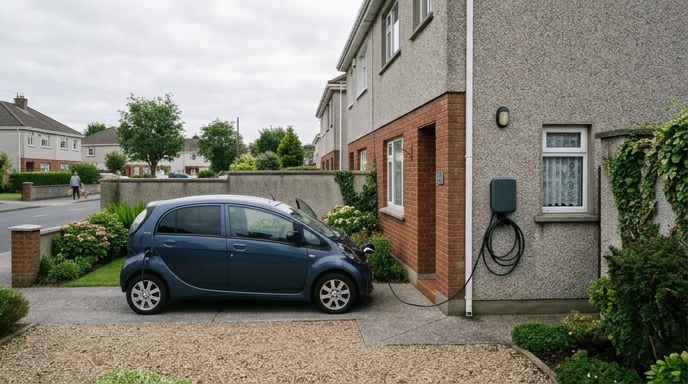
The total cost splits into two parts. There’s the charger unit itself, and then there’s the labour and materials to get it safely connected to your consumer unit and registered with ESB Networks.
Here’s the typical price range you’ll see across Dublin and Leinster in 2026.
- Basic 7.4kW tethered charger, straightforward install: €1,100 to €1,300
- Smart 7.4kW charger with app control, standard install: €1,300 to €1,600
- Premium smart charger with solar integration: €1,600 to €1,900
- 22kW three-phase charger (where three-phase supply exists): €1,800 to €2,500
After the €300 SEAI grant is deducted, most homeowners are looking at a real spend of around €900 to €1,400 for a quality smart charger, fully installed and certified.
Planning to install an EV charger? Calculate your cost and savings for a quick estimate that fits your budget.
What’s Included in the Installation Cost?
A proper quote should cover everything from the charger unit right through to the paperwork with ESB Networks. If a quote looks unusually low, chances are something is missing.
Standard Inclusions
Here’s what a fair, complete installation typically includes.
- The EV charger unit itself, with manufacturer warranty
- Up to 10 metres of cable run from the consumer unit to the charger location
- Dedicated RCBO or Type A RCD in your fuse board
- Earth rod installation where required for TT earthing
- ESB Networks notification and paperwork
- Safe Electric certification (RECI cert)
- Commissioning, testing, and app setup
What’s Not Always Included
These are the extras that catch people out, so ask upfront.
- Cable runs over 10 metres, usually charged per metre
- Fuse board upgrades if your existing board is full or outdated
- Trenching or ducting under paving or driveways
- Load balancing devices for homes with tight supply capacity
The SEAI EV Home Charger Grant Explained
The SEAI EV Home Charger Grant gives you up to €300 off the cost of purchasing and installing a home charger. It’s been the backbone of home EV charging affordability in Ireland for years, and it remains in place for 2026.
To qualify, you need to meet a few conditions.
- Own or occupy a home built and occupied before 2021, or a newer home where a charger wasn’t already fitted
- Own or have ordered an eligible electric or plug-in hybrid vehicle
- Use an installer who is registered with Safe Electric Ireland
- Have off-street parking with access to your own electricity supply
Full grant details and the current approved charger list are available on the SEAI grants website, where you’ll also find the application form. In practice, a good installer will handle the paperwork for you and the grant is paid directly into your bank account after the install is verified.
What Factors Push the Price Up?
Two houses on the same road can end up with two very different quotes. It comes down to what’s behind the walls and how far the charger sits from the fuse board.
Cable Run Distance
The further the charger from your consumer unit, the more cable and labour needed. Most quotes include the first 10 metres. After that, expect roughly €15 to €25 per additional metre, depending on whether cable is clipped, ducted, or chased into plaster.
Fuse Board and Supply Capacity
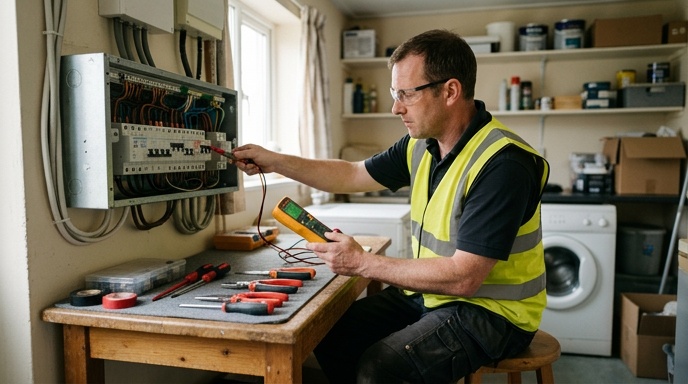
Older homes with a small consumer unit or limited main fuse capacity may need upgrades. A new consumer unit typically adds €300 to €600 to the job. Homes with a 63A main fuse and multiple heavy loads (heat pump, electric shower, oven) sometimes need a load balancer, which adds around €200 to €400.
Groundwork and External Runs
If the charger needs to sit on a garage wall across a driveway, trenching and ducting can add €250 to €600. Running cable through an attic and down an external wall is usually cheaper than lifting paving.
Charger Type and Smart Features
A basic tethered unit is the cheapest option. Smart chargers with app control, solar integration, and dynamic load management cost more but pay back through cheaper night-rate charging and, for solar homeowners, free daytime charging.
Pairing Your EV Charger with Solar Panels
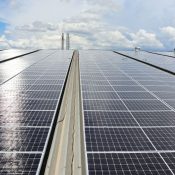
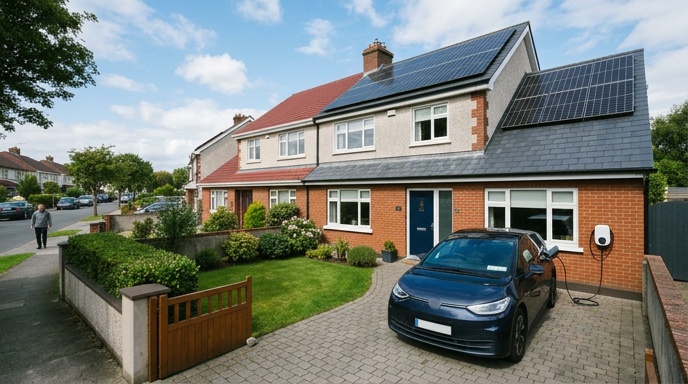
If you already have solar PV, or you’re considering it, a smart EV charger can charge your car directly from surplus solar generation. That’s essentially free fuel during daylight hours.
One of the benefits of combining solar panels and an EV charger is savings. A typical Irish EV covers around 15,000km per year, which needs roughly 2,500 to 3,000 kWh of electricity. At night-rate prices, that’s around €400 to €500 per year. Charge that same energy from your own solar and the running cost drops close to zero.
- Smart chargers detect surplus solar and ramp up charging automatically
- No import from the grid means no unit charge and no standing charge impact
- Excess solar that would otherwise export at a low rate now offsets petrol or diesel spend
How Long Does the Installation Take?
For a standard install, the actual on-site work takes around 3 to 5 hours. That covers running the cable, fitting the RCBO, mounting the charger, connecting, testing, commissioning, and setting up the app on your phone.
More complex jobs involving trenching, fuse board upgrades, or three-phase connections can run to a full day. Either way, your electricity supply is only interrupted briefly while the fuse board work is carried out.
What About Apartments and Shared Driveways?
Apartments and shared parking are trickier. The grant is only available where you have your own off-street parking and your own electricity supply feeding the charger. Communal car parks generally need management company approval and often a separate metering arrangement.
For terraced homes without off-street parking, cross-pavement charging solutions are still limited in Ireland. Your local council may have specific rules, and it’s worth checking with them before committing to any spend.
Getting the Best Value on Your Installation
The cheapest quote is rarely the best quote. What matters is that the job is done by a Safe Electric registered electrician, the charger is on the SEAI approved list, and the paperwork is filed properly so you actually receive your grant.
Before signing off on any quote, run through this quick checklist.
- Is the installer Safe Electric registered? Ask for the registration number.
- Is the charger on the current SEAI approved product list?
- Does the quote include ESB Networks notification and RECI cert?
- Is the cable run distance specified, with a rate for extra metres?
- Is the warranty clearly stated (typically 3 to 5 years on the unit)?
Ready to get a proper, itemised quote for your EV charger installation? Get in touch with our team for a free site assessment and a straight answer on what your specific home will need, grant included.