Picking the right kit for a solar PV system in Ireland is the difference between a setup that pays for itself in five years and one that struggles through a wet Leinster winter. With the SEAI Solar Electricity Grant of up to €1,800 on the table and 0% VAT on installations, the bigger question for most homeowners is no longer whether to install, but which products to actually put on the roof.
The short answer is that the best solar setup for an Irish home pairs Tier 1 panels designed for cloudy, damp conditions with a reliable hybrid inverter, a battery sized to your usage, and a mounting system matched to your roof type. Get those four right and you’ll see 60% to 70% off your electricity bill from day one.
Below is a practical breakdown of the products we see performing best across thousands of Irish installations, plus the real-world insights that don’t always make it onto the spec sheet.
What Makes a Solar Panel Suitable for Irish Conditions?
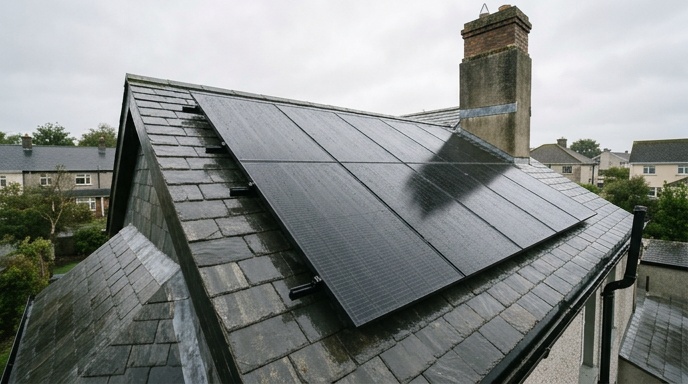
Ireland’s climate is the deciding factor in panel choice. We deal with diffused light, frequent rain, salt air near the coast, and high humidity for most of the year. A panel that performs brilliantly in southern Spain can underperform here if it’s not built for low-light efficiency.
When reviewing panels for an Irish roof, these are the specs that matter.
- Low-light performance so the system keeps producing on overcast days, which is most of them.
- A 25-year performance warranty rather than just a 10-year product warranty.
- Anti-corrosion frames and high-quality back-sheets to handle damp and salt air.
- Wind load ratings suitable for exposed sites along the east and south coasts.
- Tier 1 manufacturer status, which signals long-term financial stability and bankability.
Three panel ranges consistently tick all those boxes on Irish installs. The own-brand Topco panel comes with a 25-year warranty and is specifically engineered for Irish rain, wind and humidity. Jinko is a global Tier 1 manufacturer with a strong performance-to-cost ratio. AE Solar brings German engineering and a reputation for durability across varied conditions.
Which Inverter Should You Choose for a Home System?
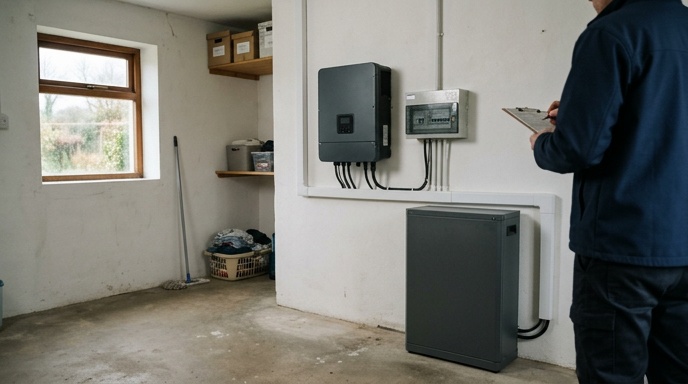
The inverter is the brain of your system. It converts DC from the panels into AC for your home, manages battery charging, and feeds data into the monitoring app. A poor inverter choice is the single most common cause of headaches we see when fixing other companies’ work.
Solis Inverters
Solis is a cost-efficient option that has earned its place on Irish roofs. The string and hybrid models are reliable, the cloud monitoring app is straightforward, and they play nicely with most major battery brands. For homeowners who want strong performance without paying a premium, this is usually where the value sits.
Huawei SUN2000 Series
Huawei has become a favourite among installers for good reason. The SUN2000 series is highly efficient, compact, and almost maintenance-free. The Fusion monitoring app is genuinely user-friendly, which matters more than people think. Customers actually check their production figures when the app is easy to use, and that tends to translate into better energy habits over time.
Either inverter will serve you well. The deciding factor often comes down to which battery you plan to pair it with and how integrated you want the ecosystem to feel.
How Do the Main Battery Storage Options Compare?
Battery storage is where Irish solar systems really start to make sense. Without one, you’ll export your midday surplus to the grid for a modest export rate. With one, you store that energy and use it during the 6pm to 10pm evening peak when electricity is dearest. That shift alone can lift your self-consumption from around 30% to over 70%.
Here’s how the main battery options stack up in practice.
- Huawei Battery integrates seamlessly with the Huawei inverter ecosystem, making it the natural pick if you’ve gone Huawei on the inverter side.
- Kstar Battery is a reliable storage solution focused on optimising energy self-consumption for households with predictable evening usage.
- Puredrive Battery is a smart option designed for maximising solar self-use and reducing grid dependence.
- FoxESS Battery offers flexible storage that’s compatible with multiple inverter systems, useful if you want to keep your options open.
Sizing matters as much as brand. A battery that’s too small leaves you buying grid power at peak rates, while one that’s too big never fully cycles and takes longer to pay back. For most three- and four-bedroom Irish homes, a battery in the 5kWh to 10kWh range hits the sweet spot. You can read more about how this works in our guide on solar battery storage before committing.
What Mounting System Is Right for Your Roof?
Mounting is the part of a solar install that homeowners think about least and installers obsess over most. Choose the wrong system and you’ll have leaks, slipped tiles, or panels that can’t handle a January storm. The German-engineered Schletter and Nicholson ranges cover every roof type we encounter on Irish properties.
Pitched Slate and Tile Roofs
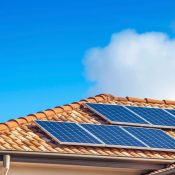
Most Irish homes have slate or concrete tile roofs, and the Schletter pitched-roof system is the go-to here. Roof hooks anchor into the rafters under the tiles, leaving no visible damage and maintaining the roof’s weather seal. This is by far the most common setup we install on Dublin and Leinster homes.
Flat Roofs and Commercial Sites
Flat roofs need a different approach. The Schletter ballasted system uses weighted trays that hold panels at the correct tilt without penetrating the roof membrane, which is ideal for commercial buildings and modern extensions. Where ballasting isn’t suitable, the Nicholson penetrative system provides a fully sealed alternative.
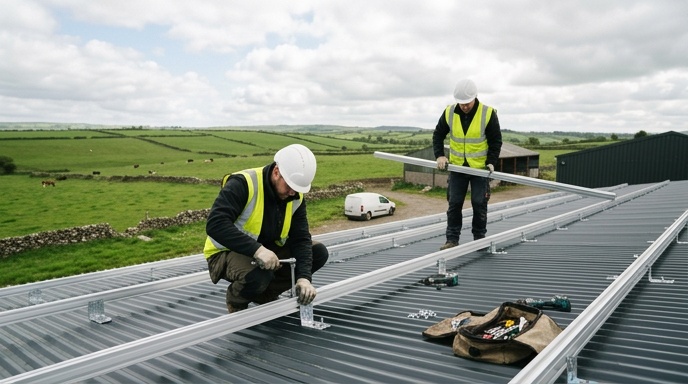
Metal Roofs on Sheds and Farms
For farm sheds and industrial buildings, the Schletter metal deck and standing seam systems are the answer. The standing seam version clamps on without any drilling, which is a huge advantage on newer agri sheds. If you’re a farmer looking at solar for farms, this is typically what sits under your panels.
What Do Real Customers Say After Installation?
Spec sheets tell you part of the story. Customer reviews tell you the rest. The themes that come up again and again on our 166+ Google reviews and 5-star Trustpilot rating point to what actually matters once the panels are on the roof.
- Installations are typically completed in a single day, often by a team of around six, with the house left exactly as found.
- The monitoring apps for Huawei and Solis systems get particular praise for being easy to check and understand.
- Long-term satisfaction is high, with customers reporting smaller bills, reliable export income, and constant hot water.
- After-sales support, like returning to reset the app when an internet provider changes, comes up repeatedly as a difference-maker.
One customer in South County Dublin summed it up neatly after a 4.5kW install with battery. The team arrived at 8am, finished by 4pm, gave good advice, and charged a competitive price. That’s the standard the products and the install process should meet.
How Do Grants and VAT Affect Your Product Choice?
Your product choices need to fit within Ireland’s grant rules. The SEAI Solar Electricity Grant requires installation by an SEAI-approved company and a Safe Electric registered electrician. Detailed eligibility is set out on the SEAI grant page, and the home must have been built and occupied before 2021.
Grant amounts work out at €700 per kWp for the first 2kWp, then €200 per additional kWp, capped at €1,800 for systems of 4kWp or more. On top of that, the 0% VAT rate on solar installations means there’s no VAT to claim back and no hidden tax loading on the equipment.
For farms, the TAMS 3 scheme covers 60% of eligible costs up to a €90,000 ceiling, with battery capacity limited to 50% of panel capacity. Commercial buildings can access the Non-Domestic Microgen Grant of up to €162,600. Each of these schemes shapes the kit list, so it’s worth getting product advice and grant advice from the same source.
Putting It All Together
The best solar system isn’t about picking the flashiest panel or the biggest battery. It’s about matching engineered components to your roof, your usage pattern, and the Irish climate. Get the panel, inverter, battery and mounting choices right and you’ll have a system that quietly earns its keep for the next 25 years.
If you’d like a tailored recommendation for your home or business, get in touch for a free consultation and we’ll design a system around your specific roof and energy use.