It’s one of those questions that catches homeowners off guard. You’ve invested thousands into a solar PV system, you’re saving money every month, and now you’re selling up. So naturally you wonder: can I bring the solar panels with me?
Technically, yes, you can remove solar panels from one property and reinstall them on another. But in almost every case, it’s a terrible idea. Between removal costs, potential roof damage, voided warranties, lost SEAI grant eligibility, and the expense of a fresh installation at your new home, you’d likely spend more than the panels are worth. Most solar professionals in Ireland will tell you the same thing: leave them where they are. They’ll add real value to your property sale instead.
That said, every situation is different. If you’ve got a particularly large or new system, or your new home has no panels at all, it’s worth understanding all the angles before making a decision. Let’s break it down properly.
Why Do Homeowners Consider Removing Solar Panels?
It makes sense emotionally. You paid for the system, you watched your electricity bills drop by 60-70%, and you don’t want to walk away from that investment. Especially if you still owe money on a residential solar panel installation or you feel like your new home will need the same setup anyway.
Some homeowners also worry that the buyer won’t appreciate the panels, or that they won’t get fair credit for them in the sale price. Those are valid concerns, but the numbers usually tell a different story once you look at what’s actually involved in removing and reinstalling a system.
What Does It Actually Cost to Remove and Reinstall?
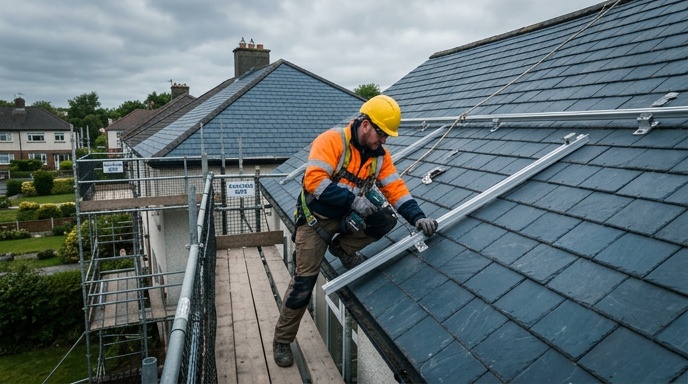
Here’s where reality bites. Removing a solar PV system isn’t like unscrewing a shelf. It involves electrical disconnection by a Safe Electric registered electrician, careful dismounting of panels without cracking them, removal of the mounting rails (which may leave holes in your roof that need repair), disconnection and transport of the inverter and battery storage, and then doing the whole process in reverse at your new property.
Breakdown of Likely Costs
While every job varies, here’s a rough idea of what you’re looking at:
- Professional removal and safe disconnection: €1,000 to €2,000
- Roof repair at the old property (filling mounting holes, replacing tiles): €500 to €1,500
- Transport and storage of panels, inverter, and components: €300 to €600
- Reinstallation at the new property, including new mounting, wiring, and commissioning: €2,000 to €4,000
- Potential need for new mounting rails if the new roof type differs (slate vs flat, for instance): €500 to €1,000
All told, you could easily spend €4,000 to €9,000 moving a system that might only be worth €5,000 to €8,000 installed new. And that’s before considering the risk of panel damage during transit, which isn’t covered by most warranties.
Hidden Risks Beyond Cost
Panels can develop micro-cracks during removal that aren’t visible to the naked eye but reduce output over time. Your inverter may not be compatible with the new roof’s orientation or the different panel layout required. And if your old system was designed specifically for your previous roof’s pitch, shading profile, and orientation, it simply won’t perform the same way on a different property.
How Does Moving Affect SEAI Grant Eligibility?
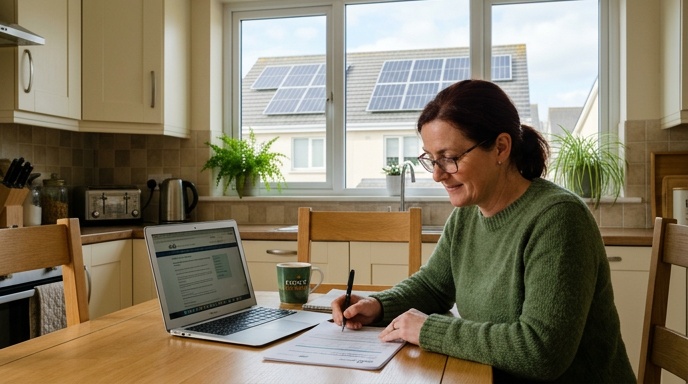
This is a big one. The SEAI solar electricity grant of up to €1,800 is tied to the property, not the person. If you received a grant for your current home, you can’t transfer that grant to a new property. The grant was paid for that specific installation at that specific address.
But here’s the good news. If your new home doesn’t already have solar panels and was built and occupied before 2021, you’re eligible to apply for a fresh SEAI grant at that address. So rather than dragging your old system across Dublin, you could get a brand new, properly designed system at your new home with grant support, and it would be optimised for that property from day one.
Going Solar handles the full SEAI grant application process on behalf of homeowners, which removes a lot of the hassle if you’re already juggling a house move.
Do Solar Panels Actually Add Value to Property Sales?
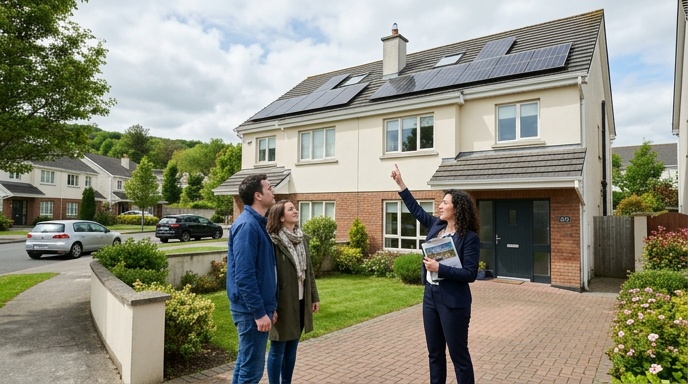
Short answer: yes, and increasingly so. Irish buyers are more energy-conscious than ever. A home with solar panels already installed signals lower running costs, a better BER rating, and a modern, well-maintained property.
BER Rating Impact
Solar panels directly improve your Building Energy Rating. A jump from, say, C2 to B2 can make your home noticeably more attractive to buyers, particularly those who are mortgage-conscious. Some lenders offer green mortgage rates for higher-rated properties, which gives buyers another financial incentive.
What Buyers See
From a buyer’s perspective, a home with solar panels means savings from day one without having to arrange their own installation. They don’t need to research installers, wait for a site survey, or deal with scaffolding and disruption. It’s already done. That convenience has genuine monetary value, and savvy estate agents know how to market it.
Several Going Solar customers have noted in their reviews that reduced bills and the ability to sell excess electricity back to the grid were deciding factors. Those same benefits transfer directly to your buyer.
When Might Removal Actually Make Sense?
There are a few rare scenarios where taking panels with you could be justified, though they’re the exception rather than the rule.
If you’re moving to a rural property with no grid connection or very poor energy infrastructure, bringing a large battery and panel system might make practical sense. Similarly, if the system is brand new (installed within the last six months) and the buyer genuinely isn’t willing to factor it into the sale price at all, removal might be worth considering. Commercial or agricultural systems on leased property sometimes fall into this category too, where the panels were never tied to the building’s sale value.
Even in these situations, get a professional assessment first. An SEAI-approved installer can tell you whether the panels will perform adequately on the new roof, whether your inverter is still compatible, and whether the cost of moving stacks up against buying fresh.
What Should You Do Instead?
For most homeowners in Dublin and Leinster, the smartest move is straightforward. Leave the panels on your current home, use them as a selling point, and install a new system at your next property.
Here’s why this works so well in practice. You recoup some of your solar investment through a higher sale price and better BER. Your buyer gets a move-in-ready, energy-efficient home. And at your new property, you get a system that’s custom-designed for that specific roof, orientation, and energy usage pattern, installed with a fresh 25-year warranty on new panels.
Going Solar designs every residential system from scratch based on a detailed site survey, shading analysis, and your household’s actual energy consumption. With over 8,000 residential installations completed across Ireland and ISO 9001 quality certification, they’ve seen every type of roof and property configuration Leinster can throw at them. A system engineered for your new home will always outperform a transplanted one from your old place.
Planning a Move? Get Proper Advice First
If you’re selling a home with solar panels or buying a new place where you’d like panels installed, get in touch with Going Solar on (01) 485 3738 or use their solar calculator to estimate what a new system would cost at your next property. Between the SEAI grant, 0% VAT, and genuinely lower electricity bills, starting fresh almost always makes more financial sense than trying to move your old system.