176 reviews



Four grant routes cover solar in Ireland, and which one applies comes down to whether the roof sits on a home, a business, a school or a farm. Start here, pick the one that fits, then follow the link for the full detail. Going Solar handles the application either way.

Four grant routes are open in Ireland. Match your property to the row below to see the scheme that applies to you and what it is worth.
| Your property | Scheme | Worth |
|---|---|---|
| Home you own, or a rental you own | SEAI Solar Electricity Grant, plus the Battery Grant | Up to €2,400€1,800 solar + €600 battery |
| Home where someone receives a qualifying social welfare payment | Enhanced SEAI solar grant | Up to €9,000 |
| Business, school, community centre or non-profit | SEAI Non-Domestic Microgen Grant | Up to €325,20045% of cost |
| Farm | TAMS III, or the Non-Domestic Microgen Grant | Up to €90,00060% under TAMS III, or 45% under Microgen |
Landlords: a property in the Dublin Rental Accommodation Scheme pilot can claim up to €9,000, on homes built and occupied before 2025 that have not had a solar grant before.
Announced, terms pending: Government has announced fully funded solar and battery storage for lower-income and medically vulnerable households. SEAI has not published the scheme terms yet. Talk to us and we will check what you qualify for as soon as they do.
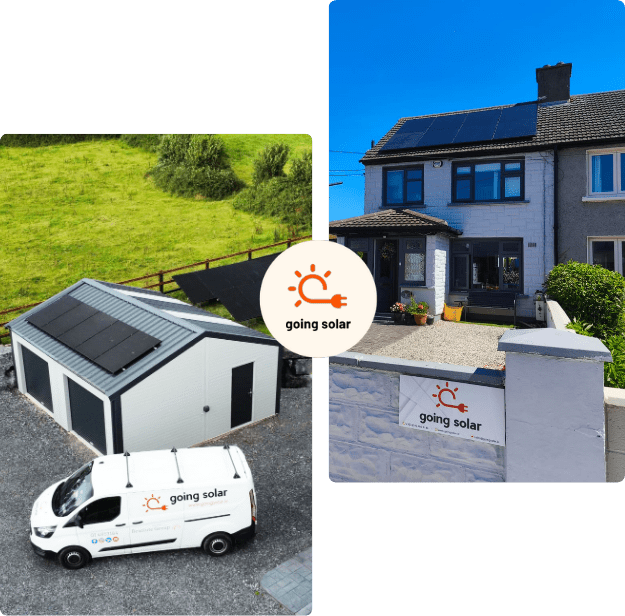
Solar Electricity Grant is a one-time support scheme under SEAI’s Home Energy Grants. Grant amounts range from €700 to €1,800, depending on your system’s generation capacity, with €1,800 the maximum for systems of 4 kWp or more.
To qualify, your home must have been built and occupied before 2025. That cutoff moved in October 2026, so homes built from 2021 to 2024 are now included. The installation must be carried out by SEAI-approved companies and certified electricians, and all work must follow the Solar PV Code of Practice.
A qualifying battery adds a further €600, covered in its own block below. Full detail is on our domestic solar grants page.
SEAI pays a flat €600 towards a home battery of 5 kWh or larger. A battery stores the solar you generate during the day so you can use it in the evening instead of exporting it, which lifts the share of your own power you actually use.
It is a separate scheme with its own application and its own approval, claimed alongside your panel grant, so panels and a qualifying battery together draw up to €2,400.
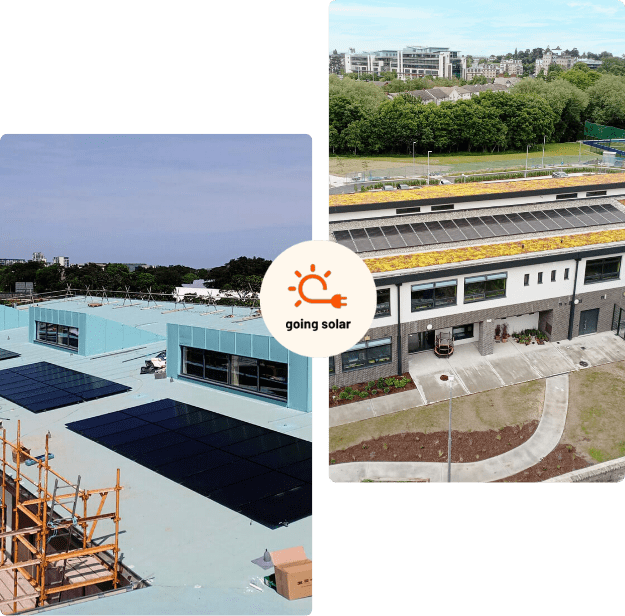
Commercial Solar PV Grant, run by SEAI as the Non-Domestic Microgen Grant, supports businesses, schools, community centres, farms and non-profits installing solar PV systems up to 1,000 kWp. SEAI pays an enhanced 45% of eligible costs on new applications made before 6 July 2027, up to a maximum of €325,200. The grant is banded by system size, and the full rate table is on the commercial page.
The grant is sized on your solar PV capacity alone. Battery storage is not an eligible cost under this scheme, so adding a battery does not increase the grant, though it can still pay for itself in stored evening power.
To apply, you must own or occupy a non-domestic building connected to the electricity grid, and SEAI approval has to be in place before any work starts. Full detail is on our commercial solar grant page.
EXCELLENT Based on 202 reviews
 Posted on Google

 Philip DoneganExcellent throughout. Initial quotations are through a portal which has all the technical details you need to know in an easy to understand manner. The install was quick and painless - everything happened as scheduled - and the tradesmen were very professional. Darren was a pleasure to deal with and always on hand to answer any questions or provide advice on the best tactics for cost savings etc. After-sales service has been great too, regarding grant certifications and the like. Highly recommended!Posted on Google
 Seán de BúrcaExcellent service and professionalism.Posted on Google
 Joanne LHWe decided to get solar panels added to the house due to rising prices in household bills, so when we were recommended Going Solar by a friend and then by our next door neighbour, we realized the time was right and Going Solar was the company to go with. The whole experience from start to finish was seamless. Everything was explained in great detail. We didn't have to worry about what to do next. They give you fantastic advice on what will work for your household and your daily usage of electricity. Nicolle looks after everything for you, from applying for your grant to getting the site survey sorted for you, and everything else in between. There is no need to worry about anything, if you have any questions or queries, they will reply quickly to you whether it's on the phone or by email. The lads that came out to do the job were brilliant! Very experienced and very professional. The job was done in the day and it was very clean work. You would never know they had been here. They were very friendly and very informative on what was being done on the day. They will even go through the app and explain it in detail. I highly recommend Going Solar for your panels, and would recommend them to anyone going forward.Posted on Google
 Walter
Trustindex verifies that the original source of the review is Google.
After endless amount of emails and phone calls to try get them back it ended up with the technical manager who told me there are having staffing issues, blocks me via email instead of a simple professional reply about a time and date to get the installer back for a simple issue. Go with a more professional company and stay away from these.Posted on Google terry conroyThis is a great company to deal with. The response time from all staff was great. They were very friendly, did neat work and were always on time. I would definitely recommend.Posted on Google
 aisling sweeneyGreat experience and assistance when getting solar panels. Everything went to plan on the day of instalation and after.Posted on Google
 Kevin RelihanGoing Solar installed an 18 panel system at my house. The team was very good and the install went well. The electricity generation since the install is as expected and the app in particular is very good to monitor usage.Posted on Google
 Karl O NeillExcellent service from start to finish. Donna the sales rep was great with everything and provided all Info we requested at any stage. She was there to answer all questions and calls. The lads that done the install were all great and hassle free too.
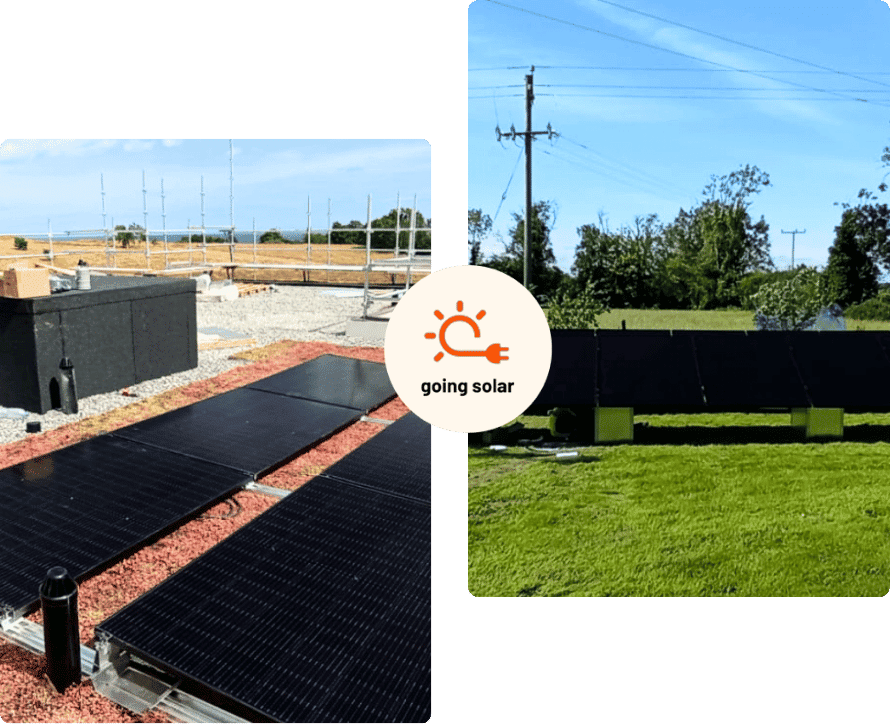
The TAMS III Grant, run by the Department of Agriculture, Food and the Marine (DAFM), supports farmers in upgrading buildings and equipment, with a strong focus on Solar Photovoltaic (PV) systems through the Solar Capital Investment Scheme. TAMS III covers 60% of eligible costs, including solar panels, inverters, cabling, meters and battery storage, with a maximum grant of €90,000 per holding. Unlike the SEAI business grant TAMS does fund battery storage, which is often the deciding factor for a farm weighing the two routes.
Farmers must manage at least 5 hectares of land, and hold both a Tax Reference Number and a Personal Public Service Number. Before applying, farmers must apply for the Basic Income Support for Sustainability (BISS). Full detail is on our TAMS III solar grant page.
It depends on the building, and sometimes on the household. Homes and private landlords use the SEAI Solar Electricity Grant, worth up to €1,800, plus €600 for a battery of 5 kWh or larger. Households receiving certain social welfare payments can claim an enhanced grant of up to €9,000 instead. Businesses, schools, community centres and non-profits use the SEAI Non-Domestic Microgen Grant. Farms can choose between that grant and TAMS III, and we advise which suits the holding.
Homes can. The €1,800 panel grant and the €600 battery grant are separate schemes with separate applications, so a household can claim both, up to €2,400. Farms cannot stack TAMS III and the SEAI business grant on the same installation, so the choice is one or the other.
Yes, for every scheme on this page. SEAI and the Department of Agriculture both require written grant approval before any installation begins, and work started beforehand is disqualified outright. This is the single most common reason an application fails, and it is why we apply on your behalf before anything is scheduled.
Three things, from 6 October 2026. The home eligibility cutoff moved from properties built before 2021 to properties built before 2025. A new €600 grant opened for home batteries of 5 kWh or larger. The business grant rose to an effective 45% of eligible costs, with a maximum of €325,200, for new applications made before 6 July 2027.
Yes. We check which scheme fits your property, prepare and submit the application, manage it through to approval and send the final paperwork after installation, including the post-works BER where one is required. You get the grant without managing the forms or the deadlines.
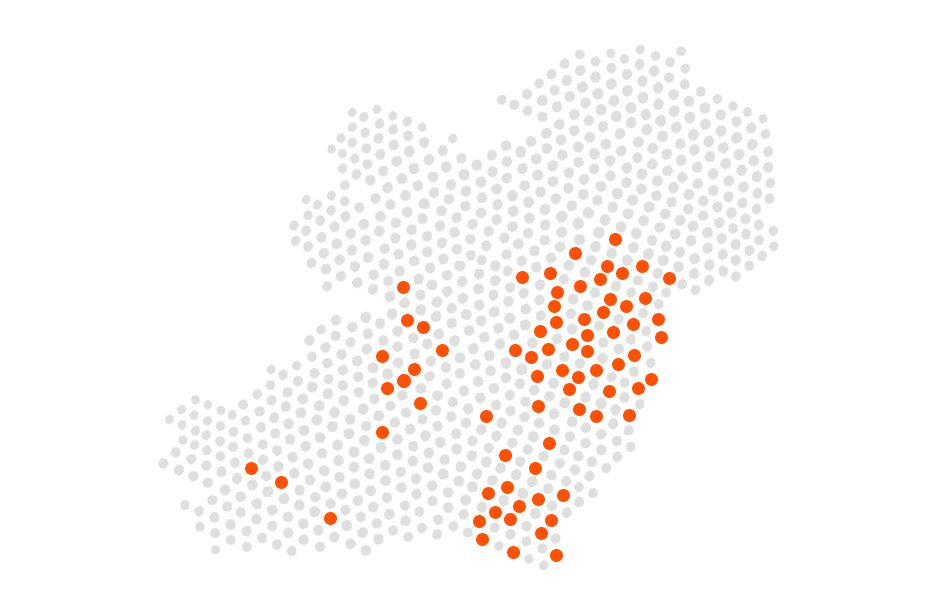
Our past solar installations across Ireland, trusted in every county!
Get a FREE Consultation & Quote