If you’re considering solar panels for your home or business, one of the first questions you’ll ask is: how long until they actually pay for themselves? It’s a fair question, and probably the most common one we hear in the Irish solar industry.
For most homeowners in Ireland, the payback period on a solar panel system sits between 5 and 7 years. Commercial installations tend to be quicker, typically 4 to 7 years depending on the size of the system and how much electricity the business uses during daylight hours. After that payback window, you’re essentially generating free electricity for another 18 to 20 years, since quality panels last 25 years or more with minimal maintenance.
But those figures aren’t fixed. Several factors push your payback period up or down, from your roof orientation to the SEAI grant you receive, right through to how much of your solar electricity you actually use yourself rather than exporting it. Let’s break all of that down so you can get a realistic picture of what solar will mean for your wallet.
How Does Solar Panel Payback Period Work?
Payback period is simply the number of years it takes for your cumulative energy savings (and any income from exporting electricity) to equal the upfront cost of your solar PV system. Once you pass that point, every cent your panels save you is pure profit.
Say your system costs €8,000 after the SEAI grant, and it saves you €1,400 a year on electricity bills plus a small amount from grid export. Divide the net cost by the annual savings and you get roughly 5.5 years. That’s your payback period.
It’s worth remembering that electricity prices in Ireland have risen significantly over the past few years. If prices continue to climb (and most analysts expect they will), your payback period could shorten further because each unit of solar electricity you generate becomes more valuable.
What Factors Affect Payback Period In Ireland?
System Size And Installation Cost
Bigger systems cost more upfront but generate more electricity. For a typical 4kWp residential system, you’re looking at somewhere between €7,000 and €10,000 before the SEAI grant. A larger commercial system will cost more in total but often has a better cost-per-kilowatt ratio, which can actually shorten the payback period.
SEAI Grants And 0% VAT
Government incentives make a massive difference. The SEAI solar electricity grant provides up to €1,800 for homeowners, which comes straight off your upfront cost and directly shortens payback. Commercial businesses can access the Non-Domestic Microgen Grant of up to €162,600. Farmers benefit from the TAMS 3 scheme, which covers 60% of eligible costs up to €90,000. On top of all that, solar installations in Ireland currently carry 0% VAT, which shaves thousands off the total price.
Self-Consumption Rate
Here’s where it gets interesting. The more solar electricity you use in your own home or business, the faster your system pays for itself. Electricity you generate and use directly replaces grid electricity at full retail price (roughly 30 to 40 cents per kWh depending on your tariff). Electricity you export to the grid earns you a much smaller payment, so maximising self-consumption is one of the smartest moves you can make.
Adding battery storage lets you store excess daytime generation for use in the evening, which pushes your self-consumption rate higher and brings the payback period down.
Roof Orientation And Shading
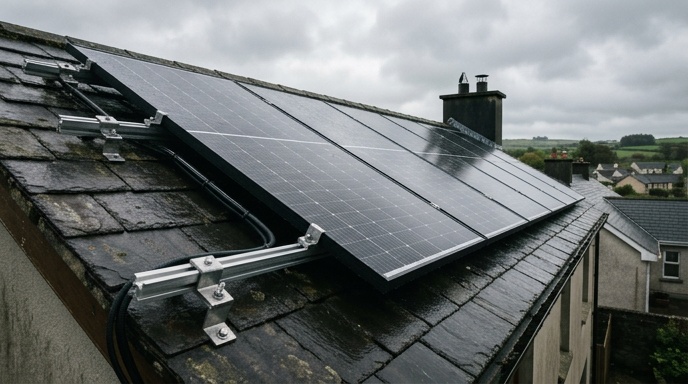
South-facing roofs produce the most solar electricity in Ireland. East-west splits can work well too, sometimes even better for self-consumption because they spread generation across more of the day. A heavily shaded roof will produce less power and stretch out payback. A proper site survey identifies exactly what your roof can deliver.
How Do Residential And Commercial Payback Compare?
Residential and commercial systems follow the same basic maths, but the numbers look quite different in practice.
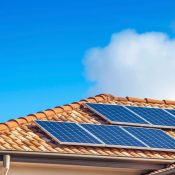
For a typical Irish home with a 4kWp system, the payback period usually falls between 5 and 7 years. A household that uses a lot of electricity during the day (working from home, running an EV charger, using a heat pump) will see faster returns because more of the solar generation gets used on-site.
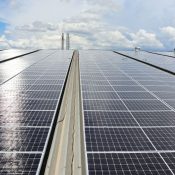
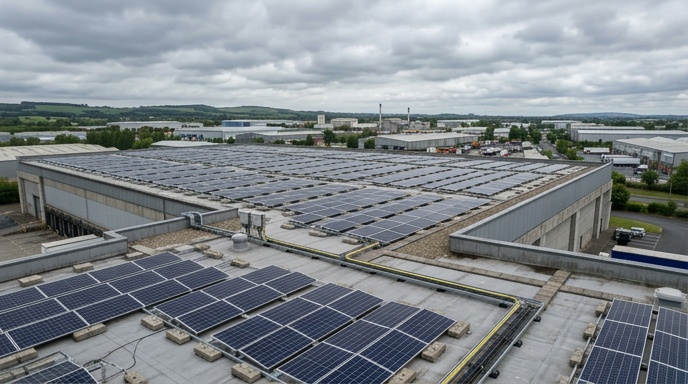
Commercial systems, particularly those in the 20kWp to 50kWp range, can pay back even faster. A 20kWp system generating around 17,300 kWh per year can save a business roughly €6,000 annually. Scale that up to 50kWp and you’re looking at approximately €12,000 per year in savings. With return on investment ranging from 14% to 25%, that’s significantly better than most other business investments you could make.
Farmers have a slightly different equation again, thanks to the generous TAMS 3 grant covering 60% of costs. That dramatically reduces the upfront investment, meaning payback periods for farm solar installations can be particularly short.
Can You Speed Up Solar Panel Payback?
You absolutely can. Here are the most effective ways to bring your payback period down:
- Run high-consumption appliances (washing machines, dishwashers, tumble dryers) during daylight hours when your panels are generating
- Install battery storage to capture excess generation and use it in the evening
- Choose a system size that matches your actual usage rather than over-sizing or under-sizing
- Make sure your installer handles your SEAI grant application properly so you receive the full amount you’re entitled to
- Sign up for an electricity export tariff so you earn income from any surplus energy you send to the grid
- Time your EV charging or hot water heating to coincide with peak solar production
Going Solar’s engineering-led approach means each system is custom-designed based on a detailed survey of your property, your energy usage patterns, and your roof orientation. That kind of precision matters because a well-designed residential system will always outperform a generic one over its lifetime. With over 8,000 residential installations completed across Ireland, the team at Going Solar has the experience to get the design right first time.
What Happens After Payback Is Reached?
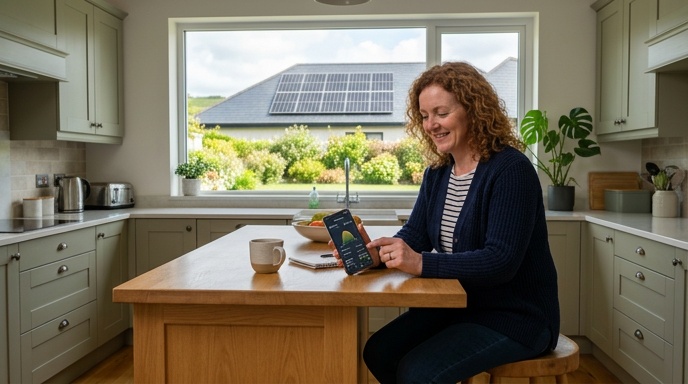
Once your system has paid for itself, you enter what many people call the “free electricity” phase. Quality solar panels, including Going Solar’s own Topco panels, come with 25-year warranties and will continue producing electricity for decades beyond the payback point.
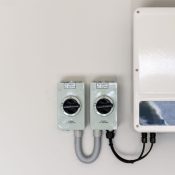
Over a 25-year lifespan, a well-designed residential system can save a homeowner tens of thousands of euro. The only significant maintenance cost during that time is typically one inverter replacement, which is a fraction of the overall savings. Panels themselves need very little attention beyond the occasional clean.
There’s also the property value angle. Solar panels improve your BER rating, which makes your home more attractive to buyers and can add measurable resale value. So even if you sell before the full 25 years are up, you’re likely to recoup more than you invested.
Is Solar Panel Payback Worth It In Ireland?
With electricity prices where they are, SEAI grants reducing upfront costs, 0% VAT, and export income from surplus generation, the financial case for solar in Ireland has never been stronger. The typical 5 to 7 year residential payback means you’ll enjoy 18 to 20 years of near-free electricity afterwards.
For businesses, the numbers are even more compelling. A 14% to 25% return on investment puts solar well ahead of most other capital expenditures.
If you’re ready to find out exactly what the payback period would be for your property, Going Solar offers a free consultation and detailed proposal. The team handles everything from the initial survey through to SEAI grant paperwork, installation, and after-sales support. Give them a call on (01) 485 3738 or fill in the free quote form on goingsolar.ie to get started.