If you’re looking at storing more of your solar generation instead of exporting it cheaply back to the grid, a 10kW battery is one of the most common sizes homeowners in Ireland ask about in 2026. It’s big enough to run a family home through the evening peak, and it pairs well with a mid-sized solar PV array.
In short, a 10kW solar battery in Ireland costs between €5,500 and €9,500 fully installed in 2026, depending on the brand, whether it’s AC or DC coupled, and how much extra electrical work your house needs. Add the cost of the panels and inverter on top if you’re doing a full new install.
Below we’ll break down what actually goes into that price, which brands sit where on the scale, and whether a 10kW battery is even the right size for your home.
What Does a 10kW Solar Battery Actually Cost in 2026?
Battery-only prices have come down noticeably over the last two years as more manufacturers entered the Irish market. That said, the installed price is still a mix of hardware, labour, cabling, and any inverter changes required.
Keep in mind that a battery on its own does not qualify for the SEAI Solar Electricity Grant. The grant covers the PV panels and inverter side of the system, not standalone storage.
Here’s a realistic 2026 price range for a 10kWh usable capacity battery, fully fitted by a Safe Electric registered installer.
- Entry-level hybrid battery, retrofit to existing inverter: €5,500 to €6,500
- Mid-range battery with new hybrid inverter: €6,800 to €8,000
- Premium brand with extended warranty and higher cycle life: €8,000 to €9,500
- Off-grid ready or three-phase setups: €9,500 and up
Not sure how much solar batteries cost and how much they help you save? Get a quick estimate with our solar calculator.
What’s Included in a 10kW Battery Installation?
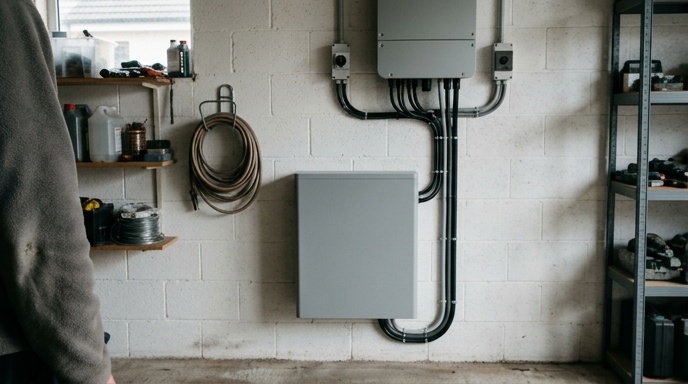
When you get a quote, the headline price should cover more than just the battery box on the wall. A proper solar installation across Ireland includes several parts working together.
Hardware Components
- The battery module or modules totalling around 10kWh usable
- A compatible hybrid inverter or an AC-coupled inverter if you’re retrofitting
- DC isolators, AC isolators, fuses and surge protection
- A smart meter or CT clamp to monitor import and export
- Cabling, containment and mounting brackets
Labour and Certification
You’re also paying for the design work, the site survey, the ESB Networks paperwork, and the final commissioning. Any qualified installer will notify ESB Networks under the NC6 form so your system is registered for microgeneration export payments.
If your fuse board is older or your earthing arrangement needs upgrading, that can add €300 to €800 to the final invoice. It’s worth asking your installer to flag this at the survey stage rather than finding out on install day.
Retrofit vs New Install: How Price Changes
Whether you already have solar panels makes a big difference to what you’ll pay for a 10kW battery.
Retrofitting to an Existing PV System
If your current inverter is a standard string inverter without battery support, you’ll need to either add an AC-coupled battery (which has its own built-in inverter) or replace your existing inverter with a hybrid one. AC coupling is quicker but slightly less efficient. Swapping the inverter is more work but often gives better long-term performance.
- AC-coupled retrofit: simpler, typically €5,500 to €7,000
- Hybrid inverter replacement plus battery: €6,500 to €8,500
New Full Solar and Battery System
For a fresh install with panels, hybrid inverter and a 10kW battery, you’re looking at a total system cost of €12,000 to €16,000 for a typical 4kWp to 6kWp array paired with the battery. After the SEAI grant of up to €1,800 comes off the PV portion, the net cost drops accordingly.
Which Battery Brands Are Popular in Ireland?
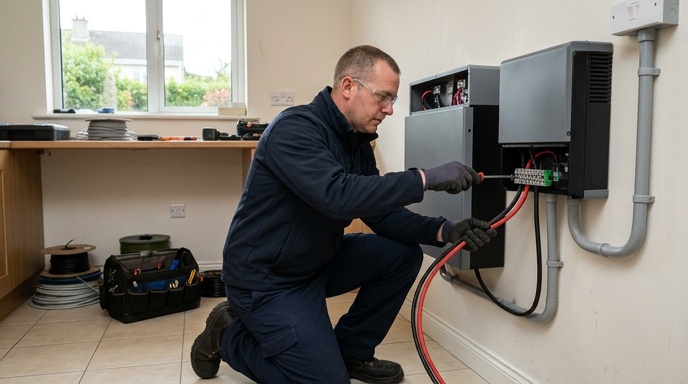
The Irish market has settled around a handful of brands that most reputable installers work with. Each has its strengths, and pricing varies based on warranty length, cycle life and inverter compatibility.
- Huawei LUNA2000: modular design, integrates neatly with Huawei inverters, popular for homes wanting a clean single-brand ecosystem
- FoxESS: flexible pairing with multiple inverter brands, competitive pricing, growing installer base
- Puredrive: smart storage focused on maximising self-consumption, good option for households with irregular usage
- Kstar: reliable mid-market option, often chosen for value-focused installs
You’ll also see some installers offering LG, BYD or Pylontech units. All are viable, but check the warranty terms carefully. A 10-year warranty with a guaranteed 70% capacity retention at end of term is the current benchmark to look for.
Is a 10kW Battery the Right Size for Your Home?
Bigger is not always better with storage. A 10kW battery makes sense if your household uses roughly 15 to 25kWh of electricity per day and you have a solar array of at least 5kWp. The best battery size for your solar system depends on a few factors. Here is how:
When 10kW Makes Sense
- Four or five bedroom homes with electric showers and higher evening demand
- Households with an EV charger drawing overnight
- Homes with a heat pump running on off-peak tariffs
- Anyone on a smart tariff wanting to arbitrage between cheap night rates and expensive peak periods
When Smaller Might Suit Better
For a three-bed semi with two adults and average usage of around 10 to 12kWh a day, a 5kWh or 6.5kWh battery often gives better value. You’ll cycle it fully most days, which is where the real savings come from.
Payback Time on a 10kW Battery in Ireland
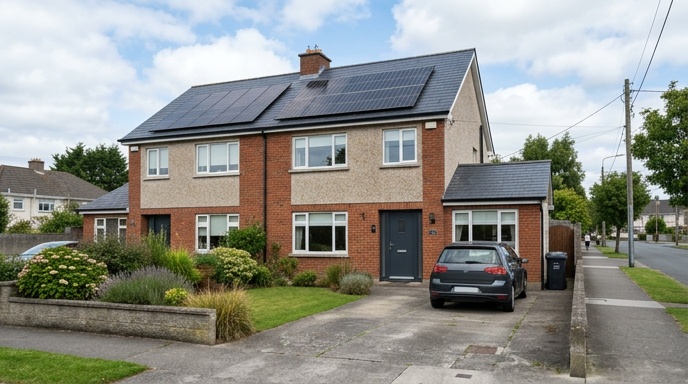
Battery payback is trickier to calculate than PV payback because it depends heavily on your electricity tariff and how you use energy. Here’s a realistic picture for 2026.
Assuming you can shift around 8 to 9kWh per day from grid import (at roughly 32 cents per kWh) to stored solar or off-peak charging (at around 12 cents per kWh), you’re saving in the region of €600 to €700 per year. That puts payback for a €7,000 battery at somewhere between 10 and 12 years.
If you’re on a smart tariff and actively managing when the battery charges and discharges, payback can drop to 7 or 8 years. On the flip side, if you rarely use the stored capacity, payback stretches out considerably. Details of current smart tariffs and export payments are worth checking on Citizens Information before you buy.
What to Ask Before You Sign a Quote
A battery is a significant investment, so it pays to get the detail right before committing. Here are the questions worth putting to any installer.
- Is the quoted capacity usable capacity or nominal? There can be a 10% difference
- What’s the warranty on cycles, years, and end-of-life capacity?
- Is the battery AC or DC coupled, and why is that the right choice for my setup?
- Will my existing consumer unit and earthing need upgrading?
- How is the system registered with ESB Networks for export payments?
- What monitoring app comes with it, and can I control charge and discharge schedules?
Get at least two or three quotes and compare like for like. A cheaper quote that skips the fuse board upgrade or uses undersized cabling isn’t really cheaper once the corrective work is done.
If you’re ready to price up a battery for your home, get in touch with Going Solar for a no-obligation site survey and a straight-talking quote based on your actual usage.