The average electricity usage in Ireland sits at roughly 4,200 kWh per household per year, according to the Commission for Regulation of Utilities. That works out at about 350 kWh a month, though your own figure can swing a lot depending on house size, heating type, and how many people live under the roof.
Knowing your yearly usage matters because it decides everything from your bill to the size of solar system that actually suits your home. A small terraced house with gas heating uses far less than a detached home running an electric heat pump and an EV charger.
In this guide we’ll break down what the average usage means in practice, what pushes it up, and how it connects to sizing solar panels for a real saving.
What Is the Average Household Electricity Usage in Ireland?
The average Irish home uses around 4,200 kWh of electricity a year, which the CRU uses as its standard benchmark for a typical household. Spread across the year, that’s roughly 350 kWh each month, or about 11 to 12 units a day. It’s the figure suppliers quote when they compare tariffs and estimate annual costs.
That number is an average, so plenty of homes land well above or below it. Here’s where most households fall.
- Low usage around 2,900 kWh, typical of a smaller flat or terraced home with gas heating and few occupants.
- Medium usage around 4,200 kWh, the standard benchmark for a three to four bed semi.
- High usage around 6,000 kWh or more, common in larger detached homes with electric heating or a heat pump.
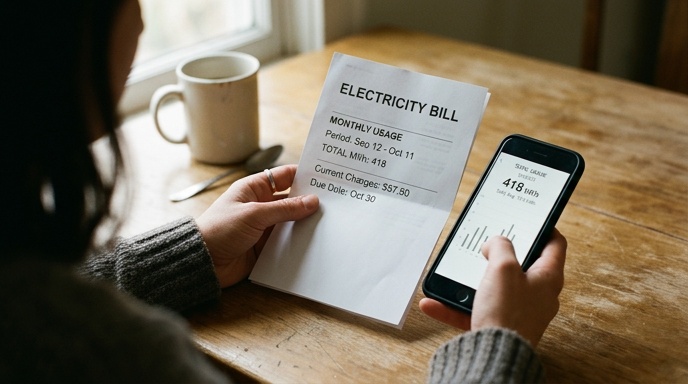
You can find your exact usage on your electricity bill. Look for the kWh figure over the billing period, then multiply up to a full year for a true annual picture. The official CRU consumer information explains how these standard usage bands are set.
What Affects Your Household Electricity Usage?
Your electricity usage comes down to house size, heating type, number of occupants, and the appliances you run daily. Two identical homes can have very different bills simply because one heats water with electricity and the other with gas. Heating and hot water are usually the biggest single drivers in an Irish home.
How Does Heating Type Change Your Usage?
Heating type is the single largest factor in your electricity usage. A home with an electric heat pump can use 3,000 to 5,000 kWh a year on heating alone, while a gas-heated home draws almost none of its electricity for warmth. Immersion heaters and electric showers also add up quickly over a year.
Do Occupants and Appliances Matter?
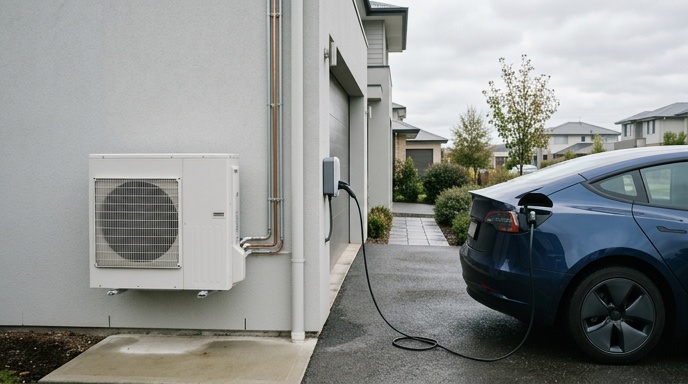
Yes, more people and more appliances mean higher usage. Each additional person adds roughly 600 to 900 kWh a year through extra cooking, laundry, hot water, and screen time. Big draws to watch include tumble dryers, electric ovens, and an EV charger, which alone can add 2,000 kWh or more annually.
- Electric heat pump or immersion heating.
- EV charging at home.
- Tumble dryer used several times a week.
- Older, less efficient fridges and freezers running non-stop.
How Does Electricity Usage Compare by House Size?
House size tracks closely with usage because bigger homes have more rooms to light, more appliances, and often electric heating. The table below gives a rough guide to typical annual consumption by home type in Ireland, based on standard CRU bands and common heating setups.
| Home Type | Typical Annual Usage | Rough Monthly Usage |
|---|---|---|
| Flat or 1-2 bed terrace | 2,900 kWh | 240 kWh |
| 3-bed semi-detached | 4,200 kWh | 350 kWh |
| 4-bed detached | 5,500 kWh | 460 kWh |
| Large home with heat pump or EV | 6,500 kWh+ | 540 kWh+ |
These are estimates and your real figure depends on habits and heating. The point is simple. The bigger and busier the home, the more it stands to gain from generating its own power.
How Much of Your Usage Can Solar Cover?
A well-sized solar system can cover roughly 60 to 70% of a typical home’s electricity usage over a year, with the rest topped up from the grid. The match isn’t perfect, since solar produces most in summer daylight while demand peaks on dark winter evenings, but a battery closes a lot of that gap by storing daytime generation for later.
To size a system against your usage, you work backwards from your annual kWh figure. A rough guide for an Irish home looks like this.
- A 4 kWp system generates around 3,600 to 4,000 kWh a year, a strong fit for an average 4,200 kWh home.
- A smaller 2 to 3 kWp system suits low-usage homes under 3,000 kWh.
- A 5 to 6 kWp system with a battery suits high-usage homes with a heat pump or EV.
Getting the sizing right is where an engineered home solar design earns its keep, because an oversized system wastes money and an undersized one leaves savings on the table. If you want to run your own numbers against your bill, try the tool below.
How Does Usage Connect to Your Solar Savings and Grants?
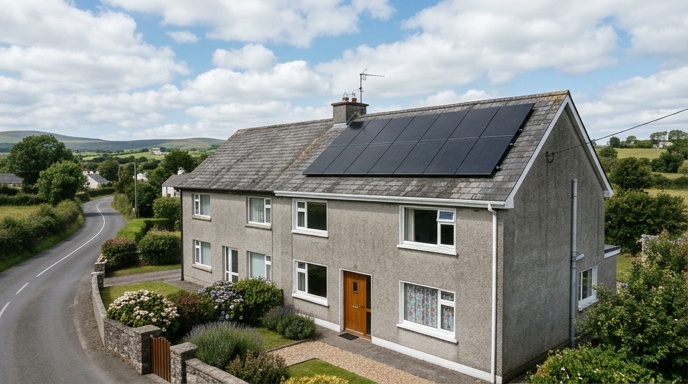
Your usage directly shapes your savings, because solar only pays back on the electricity you’d otherwise buy from the grid. A home using 4,200 kWh a year at current rates can realistically trim 60 to 70% off its bill with a right-sized system and some battery storage. Higher-usage homes often see the fastest payback because they self-consume more of what they generate.
There’s also grant support that lowers the upfront cost. The SEAI Solar Electricity Grant currently offers up to €1,800 for eligible homes built and occupied before 2021, and domestic installs carry 0% VAT. Always confirm the latest figures, as grant levels and eligibility change over time.
- Bigger savings go to homes with high daytime usage.
- Export payments add income for any excess you send to the grid.
- A better BER rating can lift property value.
You can check current support on the SEAI Solar Electricity Grant page, or read our breakdown of available solar grants in Ireland to see what your home qualifies for.
How to Lower Your Electricity Usage Before Going Solar
Cutting your usage first means you can install a smaller, cheaper solar system that still covers most of your needs. A few low-cost changes can shave hundreds of kWh off your yearly total before you spend a cent on panels. Efficiency and generation work best together.
- Switch remaining bulbs to LED to cut lighting usage.
- Run the dishwasher and washing machine on night-rate or during daylight hours.
- Replace an ageing fridge or dryer with an A-rated model.
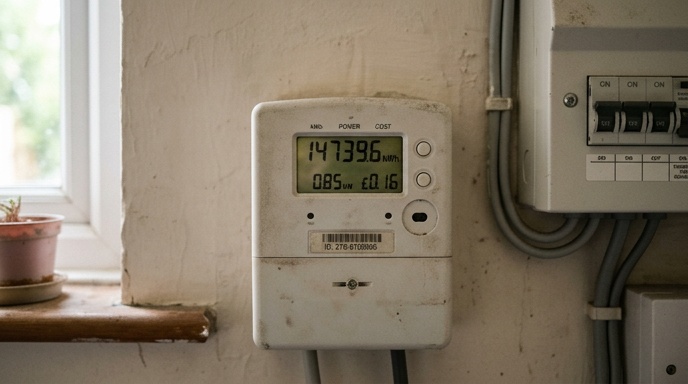
- Use a smart meter reading to spot standby drains and phantom loads.
Once you know your real usage and have trimmed the waste, you’re in a strong position to size a system that fits your home exactly rather than guessing.
Knowing Your Usage Is the First Step
Your annual electricity usage is the foundation for every solar decision, from system size to expected savings and payback. Pull your kWh figure off your bill, compare it to the averages here, and you’ll have a clear sense of how much a solar system could offset.
For a tailored assessment of your home’s usage and the right system to match it, request a free solar quote and the team will size it around your real numbers.