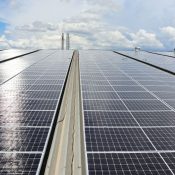
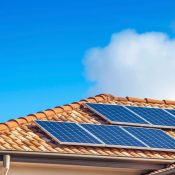
Bird and pigeon proofing for solar panels means fitting a fine mesh or clip system around the edges of your array to stop birds nesting in the gap between the panels and the roof. It keeps pigeons out, protects your wiring, and stops droppings building up on the tiles below.
Pigeons love the space under solar panels. It’s warm, sheltered, and safe from predators. Left alone, they’ll pack it with nesting material, foul the roof, and chew or lift cables. That’s why most installers recommend proofing on any rooftop array where pigeons are already active nearby.
The good news is that proofing is straightforward and can be added to a system you already own or fitted at the same time as a new install. Here’s how it works, what to watch for, and when it’s worth doing.
Why Do Pigeons Nest Under Solar Panels?
Pigeons nest under solar panels because the raised gap between the panel and the roof gives them a dry, warm, predator-free ledge that mimics the cliff ledges they naturally roost on. Once one pair moves in, more follow, and the space fills with nesting debris fast.
The panels sit a few centimetres above the tiles on a mounting rail. That gap is the problem. It’s exactly the kind of covered space a pigeon looks for.
Common signs pigeons have moved in under your array:
- Cooing or scratching sounds coming from the roof, especially early morning
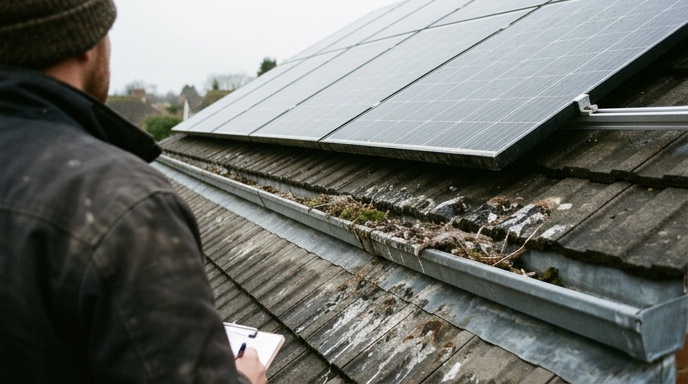
- Droppings streaked down the tiles, gutters or wall below the panels
- Feathers and twigs collecting in the gutter
- Birds repeatedly landing on the same edge of the array
If you spot these early, proofing is a quick job. Leave it a season or two and you’re looking at a proper clean-out first, which adds cost and hassle.
What Damage Can Birds Cause to a Solar System?
Birds under solar panels can damage wiring, reduce output, block airflow, and foul the roof, and in bad cases the mess voids parts of a workmanship warranty. Pigeons are the worst offenders because they nest in colonies and stay put once settled.
The problems fall into a few clear areas.
1. Chewed and Lifted Cabling
Pigeons peck at and pull on the DC cables running between panels. Exposed or damaged cabling is a fire and fault risk, and it can knock a string of panels offline. Repairs mean lifting panels, so labour adds up quickly.
2. Droppings and Nesting Debris
Droppings are acidic and stain tiles, render and gutters. Nesting material blocks the airflow gap under the panels, and packed-in debris can trap moisture against the roof. Over time that shortens the life of your tiles and fixings.
3. Lost Output and Blocked Gutters
Droppings that splash onto panel edges and shading from nesting waste can trim generation slightly. The bigger issue is gutters, feathers and twigs wash down and clog them, which causes overflow and damp problems on the wall below.
How Does Bird Proofing for Solar Panels Work?
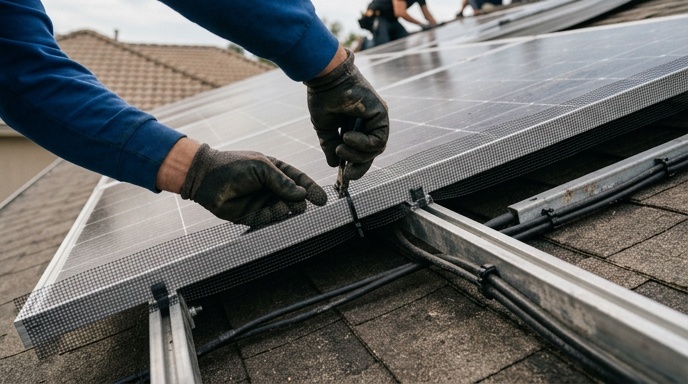
Bird proofing works by sealing the open gap around the perimeter of the array with a galvanised or plastic-coated mesh, held in place with clips that grip the panel frame without drilling into it or the roof. Birds can’t get under the panels, and airflow underneath is kept clear.
The mesh runs around all four sides of the array. The clips are the key detail, a good system fixes to the panel frame, so nothing pierces the roof membrane or the panels themselves.
Typical proofing options include:
- Clip-on mesh: the standard choice, a fine steel mesh clipped to the panel edge, near invisible from the ground
- Bird spikes: fitted along ridges or panel tops where birds land, less common on arrays themselves
- Combined systems: mesh around the perimeter plus spikes on any favoured landing edge
A proper solar installation includes checking for and removing any existing nests first. Sealing birds in is both cruel and pointless, they’ll damage the mesh trying to get out.
How Much Does Bird Proofing for Solar Panels Cost?
Bird proofing for solar panels in Ireland typically ranges from a few hundred euro for a small array up to the low four figures for a large one, and the exact price depends on array size, roof access, and whether a clean-out is needed first. Get a quote based on your own roof, as no two jobs are identical.
The main factors that move the price are worth knowing before you ring around.
| Cost Factor | Effect on Price |
|---|---|
| Array size (number of panels) | More perimeter mesh means more materials and labour |
| Roof access and pitch | Steep or high roofs need scaffold or extra safety kit |
| Existing nests | A clean-out and disinfection is charged on top of proofing |
| System type | Clip-on mesh is cheaper than mesh plus spikes combined |
If you’re planning proofing alongside a new install, it’s cheaper to do both together while the team and access equipment are already on site. Weigh proofing cost against the potential repair bill from chewed cabling, which usually makes it an easy decision.
For a fuller picture of what an install involves, our guide to solar panel costs in Ireland breaks down the wider spend.
Can You Add Bird Proofing to Existing Solar Panels?
Yes, bird proofing can be retrofitted to any existing rooftop solar array, and it’s one of the most common add-ons people request after a year or two of ownership. The clip-on mesh is designed to fit around panels that are already installed, so nothing has to be removed permanently.
The process on an existing system is short.
- An installer inspects the array and checks for active nests or debris
- Any nesting material is cleared and the area disinfected
- Mesh is measured, cut and clipped around the full perimeter
- The gutters and cabling are checked while access is set up
Most retrofit jobs are done in a day. Because the work is on the panel frames and edges, it doesn’t affect your SEAI grant status or your panel warranty when fitted correctly by a qualified team. Always use someone experienced with solar arrays rather than a general pest-control firm, as the wrong clips can damage the frame.
Do You Need Bird Proofing in the Irish Climate?
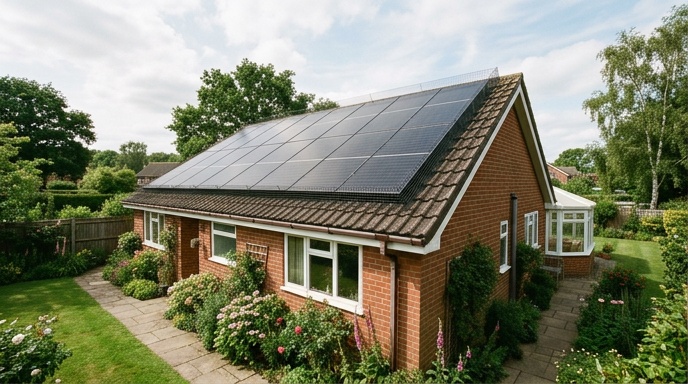
Bird proofing is worth considering on most Irish rooftop arrays because feral pigeons are common across towns and cities, and Ireland’s mild, damp climate makes the sheltered space under panels especially attractive year-round. Homes near parks, farms, or existing pigeon roosts are at the highest risk.
It isn’t automatic for every home. Rural properties with few pigeons about may never see a problem, and it’s fine to wait and watch rather than proof from day one.
Proofing tends to make most sense if you tick any of these boxes:
- You’ve already seen pigeons landing on or near your array
- Neighbours have pigeon issues on their roofs or panels
- Your home is near a park, seafront, farm or grain store
- You’ve noticed droppings on tiles or in gutters below the panels
The Department of Housing keeps guidance on wildlife and nesting, and the National Parks and Wildlife Service information on protected species is worth a look, as some wild birds and active nests are protected during breeding season. That’s another reason to proof outside nesting season and to clear nests properly rather than block them in.
How to Choose an Installer for Solar Bird Proofing
Choose an installer who works with solar arrays specifically, uses non-penetrative clip-on mesh, and includes a nest inspection and clean-out in the quote. A firm that installs solar day in, day out understands the mounting, cabling and warranty implications far better than a general pest controller.
Before you book, run through a short checklist.
- Ask whether the mesh clips to the frame or drills into anything, it should never pierce the roof or panels
- Confirm nest removal and disinfection are covered, not charged as a surprise later
- Check they’ll inspect the cabling and gutters while up there
- Ask about a workmanship guarantee on the proofing itself
An engineering-led team that already handles installs and aftercare is the safest bet, since they know exactly how your system is built. If you’d like proofing looked at on your own roof, the team here can advise on the right approach, so get in touch for a quote and we’ll take it from there.