Commercial electricity rates in Ireland in 2026 typically fall somewhere between 25c and 40c per kWh for small and medium businesses, before standing charges and levies are added. Larger users on negotiated contracts often pay less per unit, while smaller premises on standard tariffs sit at the higher end.
That unit rate is only part of the story. Your final bill also carries a daily standing charge, network charges, the PSO levy and VAT, so two businesses using the same amount of power can still pay very different totals.
This guide breaks down what Irish businesses actually pay for electricity, what moves the price up or down, and the practical ways to cut the bill, including generating your own power on site.
What Are Commercial Electricity Rates in Ireland in 2026?
Commercial electricity rates in Ireland in 2026 generally range from around 25c to 40c per kWh for the unit (day) rate, depending on business size, contract type and supplier. On top of the unit rate you pay a standing charge, network charges and levies, which can add a meaningful chunk to the total.
Rates move with wholesale energy markets, so the figures here are a working guide rather than a fixed quote. Always check a live tender or supplier offer for your own premises.
- Small business (micro) rates tend to sit at the higher end, closer to 35c to 40c per kWh.
- Medium business rates often land in the 28c to 35c per kWh band.
- Large industrial users on negotiated or half-hourly contracts usually secure lower unit rates.
For context on how prices are regulated and tracked, the Commission for Regulation of Utilities publishes guidance on energy charges and supplier obligations in Ireland.
What Charges Make Up a Business Electricity Bill?
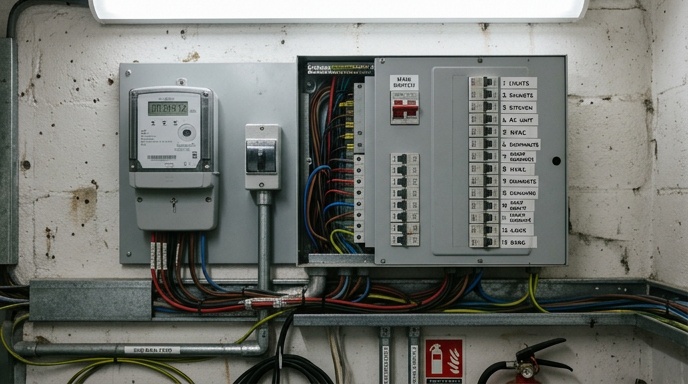
A business electricity bill is built from several layers, not just the unit rate. The unit (kWh) charge covers the energy you use, but standing charges, network costs, levies and VAT all stack on top and shape the final figure you pay each cycle.
Knowing each line helps you spot where the money actually goes and where you can push back during a tender.
- Unit rate. The price per kWh of electricity used, often split into day and night rates.
- Standing charge. A fixed daily cost for being connected, regardless of usage.
- Network charges. Paid to ESB Networks for using the grid, often bundled into the rate.
- PSO levy. A government levy supporting renewable and security-of-supply schemes.
- VAT. Applied to the total, with a reduced rate on electricity confirmed at supply.
You can check how VAT applies to energy supply through Revenue’s guidance on VAT rates, which is worth a look before you sign any contract.
What Drives Commercial Electricity Prices Up or Down?
Commercial electricity prices in Ireland are driven mainly by wholesale gas and energy market costs, your contract type, how much power you use and when you use it. Businesses with predictable, high consumption and flexible usage patterns are in the strongest position to negotiate a lower rate.
1. Wholesale Energy Markets
Wholesale costs are the biggest single factor behind your rate. Irish electricity pricing is heavily tied to gas, so global gas prices feed straight through to what your supplier charges. When markets spike, fixed-rate contracts protect you, while variable deals move with the market.
2. Contract Type and Length
Fixed contracts lock your unit rate for a set term, usually one to three years, giving budget certainty. Variable contracts track the market and can save money when prices fall but expose you when they rise. Longer fixed terms often carry a small premium for that stability.
3. Usage Profile and Timing
How and when you use power matters as much as how much. Running heavy loads during peak hours costs more, while shifting usage to off-peak or day-rate windows can trim the bill. Suppliers also price in your load profile, so steady demand earns better terms than spiky, unpredictable use.
How Do Commercial Rates Compare to Home Electricity Rates?
Commercial electricity rates per kWh are often lower than domestic rates for larger users, but smaller businesses can actually pay similar or higher unit prices than households. The key difference is that businesses buy at scale and can negotiate, while homes are on standard published tariffs.
The table below gives a rough 2026 comparison. Treat these as indicative ranges, since both markets shift with wholesale costs.
| Customer Type | Typical Unit Rate (per kWh) | Contract Flexibility |
|---|---|---|
| Micro business | 35c to 40c | Limited, near standard tariffs |
| Medium business | 28c to 35c | Moderate, can tender |
| Large industrial | Negotiated, often lower | High, half-hourly contracts |
| Domestic home | 30c to 38c | Low, published tariffs only |
The real advantage for business owners is control. Unlike a household, you can tender your supply, switch suppliers at contract end and reduce demand by generating your own power.
How Can Businesses Cut Their Electricity Costs?
Businesses can cut electricity costs by tendering their supply contract, improving energy efficiency, shifting usage off peak and generating their own power with solar PV. On-site generation is the only option that reduces the number of units you buy rather than just the price per unit.
A combined approach works best. Start with the quick wins, then look at longer-term investments that keep paying back for decades.
- Tender your contract before renewal rather than rolling onto default rates.
- Fix your rate in a stable market to protect against price spikes.
- Upgrade lighting and equipment to lower-consumption alternatives.
- Shift flexible loads to cheaper off-peak windows.
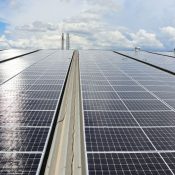
- Install commercial solar panels to generate power on site and buy less from the grid.
Solar is the standout here because a well-sized system can produce power for a fraction of grid prices across a 25-year panel lifespan. A typical 20kWp commercial system produces roughly 17,300 kWh a year, which offsets a serious slice of daytime demand for most businesses.
Is Solar Worth It Against 2026 Electricity Rates?
Solar is strongly worth it against 2026 commercial electricity rates for most businesses with daytime energy use and roof or ground space. With unit rates sitting between 25c and 40c per kWh, every unit you self-generate avoids that cost, and payback typically lands in the 4 to 7 year range.
On a well-designed system, businesses often see returns of 14% to 25%, with panels lasting 25 years or more. A 50kWp system can save in the region of €12,000 a year depending on usage, while a 20kWp system commonly saves around €6,000 a year.
- You cut your exposure to future rate rises for decades.
- You can claim the Non-Domestic Microgen grant on eligible commercial systems.
- Excess power can be exported for additional income.
- Maintenance is minimal, usually just an inverter change over the system life.
Grant support makes the numbers even better, so it’s worth reading the detail on the commercial solar grant before you plan a system. For farm premises, the TAMS 3 scheme covers a large share of eligible costs and is worth checking against your own holding.
If you want to see how solar stacks up against your current rates, our engineering-led team designs commercial systems around your actual usage rather than a one-size estimate.
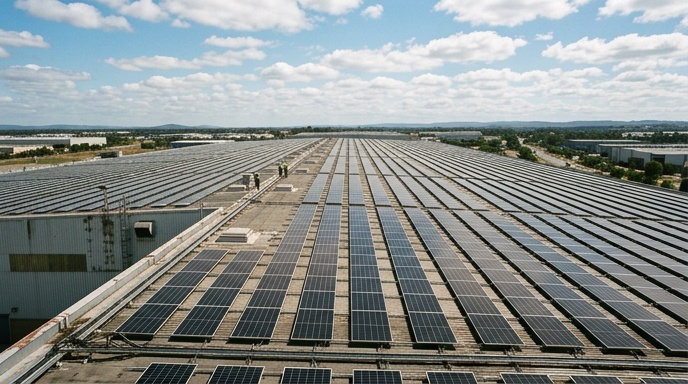
Commercial electricity rates in 2026 remain high enough that every business should know exactly what it pays and where it can cut back. The biggest long-term saving usually comes from generating your own power, where you stop buying units at grid prices altogether.
To find out what a tailored commercial solar system would save against your current rates, request a free quote from our team and we’ll size it around your real demand.