How Many Solar Panels Do You Need in Ireland?
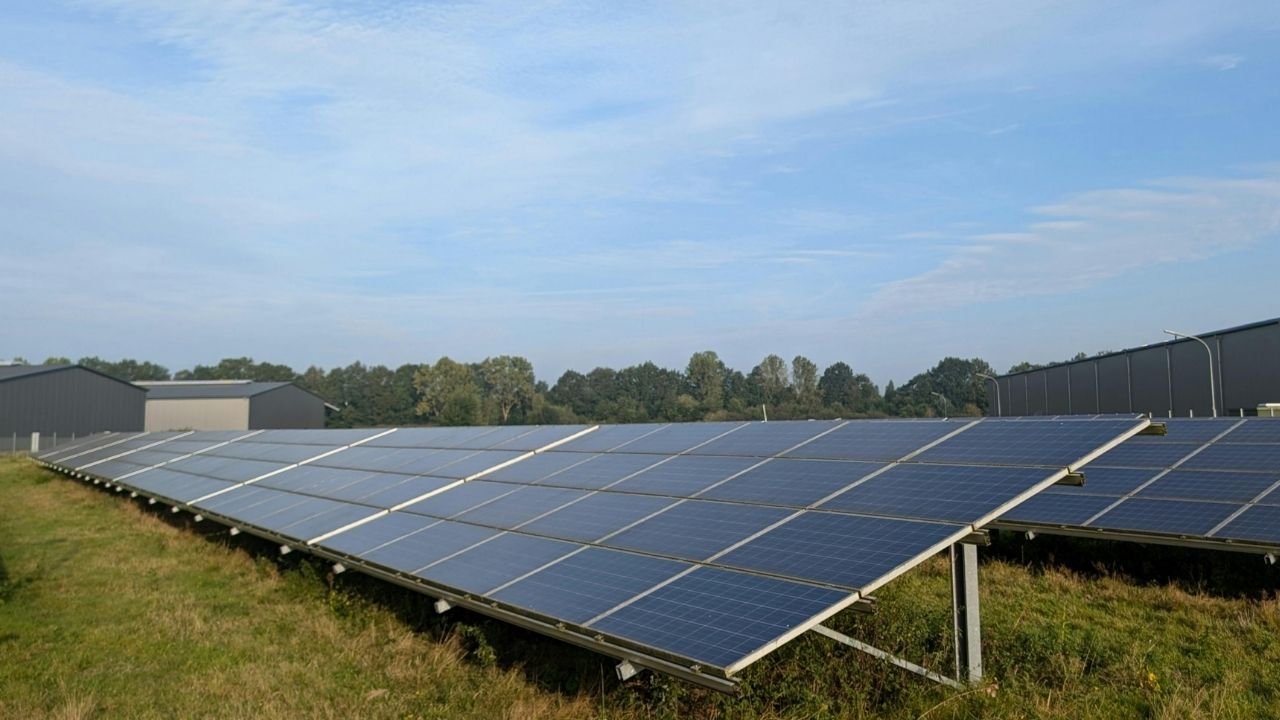
Most Irish homes need about 7 to 10 solar panels, a 3kWp to 4kWp system, enough to cover a large share of a typical household’s electricity use.
How many solar panels you need comes down to three things, your electricity usage, your usable roof space, and the wattage of the panels fitted. Work through those and the right figure appears quickly.
System size matters for more than output. It sets how much of the SEAI grant you can claim, and whether you can be paid for the electricity you send back to the grid. Both are covered below.
How Many Solar Panels Does a Typical Irish Home Need?
A typical Irish home needs around 7 to 10 panels, which is a 3kWp to 4kWp system. That range matches the yearly electricity use of most two to four-bedroom houses.
Smaller homes with low usage can sit at 2kWp, while larger homes, or those with an EV or heat pump, often move to 5kWp or 6kWp.
| System size | Approx. panels | Suits |
| 2 kWp | 4 to 5 | Smaller home, lower usage |
| 3 kWp | 7 to 8 | Two or three-bed, average usage |
| 4 kWp | 9 to 10 | Three or four-bed, higher usage |
| 5 to 6 kWp | 12 to 15 | Large home, or added EV or heat pump |
Those counts assume modern panels of around 400W to 450W, the common range today. A tailored home solar design then confirms the exact number from a roof survey, shading analysis and your real usage, so the system fits your house rather than an average.
What Determines How Many Solar Panels You Need?
Your electricity usage is the biggest factor, followed by roof space, orientation, shading and panel wattage. A home that uses more power, or plans to add an EV charger or heat pump, needs a larger array.
A smaller or heavily shaded roof also limits how many panels will fit and generate well, so the roof often sets the practical ceiling.
The main things that move the number up or down:
- Electricity usage. Your annual kWh from the last 12 months of bills is the anchor for sizing everything else.
- Usable roof space. Larger, unobstructed roofs take more panels. Roughly 9 to 10 panels need about 18 to 20 m².
- Orientation and shading. South-facing roofs yield most. East and west still perform well, while chimneys and trees cut output.
- Panel wattage. At 400W to 450W per panel, higher-rated panels reach the same system size with fewer units.
- Battery, EV or heat pump. Each of these raises demand and daytime self-use, which usually justifies more panels.
Roof space is the constraint people underestimate most, so it is worth checking how much usable roof space you have before you settle on a system size.
How to Work Out the Right Number of Panels for Your Home
Start with your annual electricity use, turn it into a system size, then divide by panel wattage to get the panel count. Most Irish homes land at 3kWp to 4kWp once they do this, around 7 to 10 panels, before a final check against the roof.
- Find your yearly usage. Add up the kWh on your last 12 months of electricity bills. On average, an Irish home uses roughly 4,200 kWh a year.
- Convert it to a system size. As a planning guide, each 1kWp generates about 900 kWh a year in Irish conditions, so most homes suit 3kWp to 4kWp.
- Divide by panel wattage. A 4kWp system at 420W per panel is about 10 panels (4,000 ÷ 420).
- Check the roof. Confirm the panels fit the usable, unshaded area and the preferred orientation.
To skip the arithmetic and see a sized system and likely savings for your own address, run your numbers below.
How System Size Affects Your SEAI Solar Grant
System size sets your grant directly, because the SEAI Solar Electricity Grant is paid per kilowatt-peak (kWp) installed. It is worth up to €1,800, and a 4kWp system claims the full amount.
That is why many homes size up to 4kWp even where a slightly smaller system would cover their use. The extra capacity is part-funded by the grant and lifts both self-use and export.
| Capacity | Grant rate | Band total |
| First 2kWp | €700 per kWp | up to €1,400 |
| 3rd and 4th kWp | €200 per kWp | up to €400 |
| Maximum at 4kWp | €1,800 |
Eligibility is straightforward. The system must be fitted by an SEAI-registered installer, and the home must have been built and occupied before the scheme cut-off, which was recently extended so more homes now qualify.
The grant is paid to you after a post-works BER assessment, and 0% VAT applies to a domestic installation. You can read the current solar grant rules and eligibility in more detail before you apply.
Can You Earn From the Solar Electricity You Do Not Use?
Yes. You are paid for the solar electricity you generate but do not use at home, through the Clean Export Guarantee (CEG).
Your supplier pays for every unit you export to the grid under the government’s micro-generation scheme, at a rate each supplier sets, so it is worth comparing offers before you sign up.
Older guides sometimes mention a feed-in tariff or REFIT. Those schemes supported large-scale generators and are closed to new applicants, so the payment that applies to a home today is the Clean Export Guarantee.
Export rates are usually lower than the price you pay for electricity, so using your own power is worth more than selling it. That is the argument for sizing to your usage, and for adding a battery to store daytime generation for the evening instead of exporting it. More panels than you can use or store will mostly export at the lower rate.
Get the Right Number of Panels for Your Home
The right number of panels is the number that matches your electricity use and roof, sized to claim the full grant where it makes sense. For most Irish homes that is 7 to 10 panels, but your usage and roof decide the final figure.
Book a free quote and site assessment to get an exact system size and panel count for your home, with the grant and paperwork handled from start to finish.
Planning a switch to solar energy?
Contact Going Solar now and Get Free Advice & Quote Within Minutes!
Frequently Asked Questions
Contact Going Solar Now!
Joe Brennan
Founder @ Going Solar
Joe Brennan, the founder of Going Solar, is dedicated to making solar power mainstream in Ireland and meet SEAI objectives. With a focus on affordability and sustainability, he is bringing renewable energy solutions to homes, reducing costs & environmental impact.

Recent Posts
5 Features of Schletter German Flat Roof Ballasted System
What Are the Ireland’s Best Counties for Solar?
What is the Solar Panels VAT Rate in Ireland?

How to Prepare for Your BER Assessment?