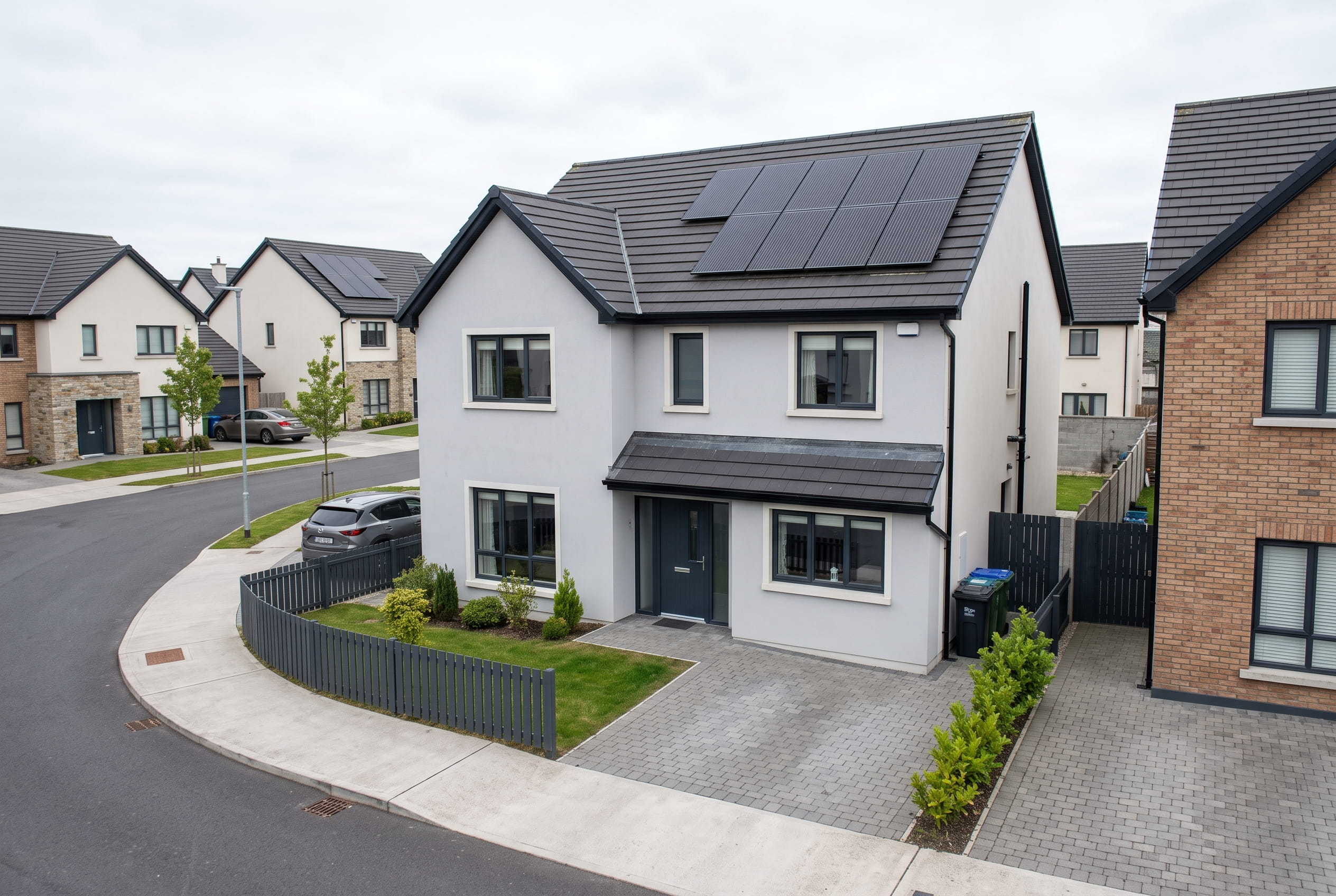
Yes. If your home was built and occupied before 2025, it qualifies for the SEAI solar PV grant, which rules in houses completed in 2021, 2022, 2023 and 2024.
The cut-off moved on 6 October 2026. Before that date the grant only covered homes built and occupied before 2021, which is why so many owners of newer houses were turned away. That single change is the whole answer to most questions about SEAI grants for new builds.
Homes first occupied in 2025 or later are still outside the scheme. The grant amounts and the rest of the conditions stayed exactly as they were, so nothing else about the process has changed for anyone.
Do SEAI Grants for New Builds Cover Homes Built After 2021?

Homes built and occupied between 2021 and 2024 are now eligible for the solar PV grant, following the change that took effect on 6 October 2026. Homes built and occupied from 2025 onwards are not eligible, no matter what other conditions they meet. The same age change was applied to the solar water heating grant.
The build year SEAI works from is the year the house was built and occupied, not the year you bought it. If you are second-hand buyer of a 2022 house, the 2022 date is what counts, and you can read the current rule on the SEAI solar electricity grant page before you apply.
One point worth being clear on. Eligibility is about the age of the property, not the age of the owner’s electricity account or how long you have lived there.
What the Solar PV Grant Is Worth on a Home Built After 2021
The grant is worth up to €1,800 on a newer home, paid pro rata by system size, plus €600 for a battery of 5 kWh or larger. A 2021 build gets the same money as a 1995 build. There is no reduced rate for newer housing stock and no extra rate either.
| What you install | Grant value |
| 2 kWp solar PV | €1,400 |
| 2.5 kWp solar PV | €1,500 |
| 3 kWp solar PV | €1,600 |
| 4 kWp or larger solar PV | €1,800 (capped) |
| Battery, 5 kWh or larger | €600 |
Solar PV is paid at €700 per kWp for the first 2 kWp, then €200 for each additional kWp up to 4 kWp. Stack the maximum PV grant with the battery grant and the combined ceiling is €2,400.
Both measures can go on a single application if you install them together. If you only do one now, you can apply for the other later, provided you still meet the conditions at that point.
Sizing is the lever that decides what you actually receive, so it is worth running the numbers with a solar savings calculator before you commit to an array size.
Conditions Newer Homes Still Have to Meet for the Solar Grant
Every condition that applied before the change still applies now. The age rule moved. Nothing else did. A newer home has to clear the same checks as any other property:
- Have an MPRN, so an off-grid property does not qualify
- Have had no previous SEAI solar PV funding at that MPRN
- Use an SEAI-registered solar PV company, with electrical work by a Safe Electric registered electrician
- Have grant approval in writing before any installation work starts
- Complete a post-works BER assessment before the grant is paid
Timing is where people slip up. Once approval lands you have 8 months to finish the works and submit the Declaration of Works, and starting early disqualifies the application outright. Citizens Information sets out the same eligibility conditions for solar panel grants in plain terms if you want a second read of them.
Landlords, owner management companies and Approved Housing Bodies can apply as well, not just owner-occupiers.
What to Check Before Putting Solar on a 2021 to 2024 Home

Three things come up on newer houses that rarely come up on older ones. None of them blocks a grant, but all three are easier to deal with before an installer is on the roof than after.
1. Roof Work and Your Builder’s Structural Warranty
Most new homes in Ireland are sold with a structural warranty from the builder, and roof penetrations are the kind of work that can affect it. Check the terms of your warranty document, or ask the provider directly, before anyone drills into the covering. Installers do this work on warranted roofs regularly, so it is a paperwork question rather than a reason to hold off.
2. Panels Already Fitted by the Developer
Many houses built to the current regulations arrived with a small solar array already on the roof. That matters here because the grant is closed to properties that have already drawn SEAI solar PV funding at the same MPRN. A developer-fitted array is usually not grant-funded, so the route is often still open, but confirm the funding history for the MPRN before you plan an extension to the system.
3. BER Gains on an Already Efficient Home
A newer house is typically well insulated and already holds a strong BER, so solar moves the rating less than it would on a 1970s semi. The bill saving is a separate question and it does not shrink. Your home solar PV system generates the same electricity whatever the starting rating, so judge the investment on consumption and payback rather than on BER points.
[Image: homeowner checking an MPRN number on an electricity bill at a kitchen table]
Turned Down Before October 2026? Where You Stand Now
Being refused under the old rule has no bearing on a new application. The 2021 cut-off was simply replaced, and there is no record of a previous refusal counting against you. If you enquired in 2023 or 2024 and were told your house was too new, that answer is now out of date and you can apply from scratch.
The one thing that does carry forward is funding history. A property that has already had an SEAI solar PV grant paid at its MPRN stays excluded, which is a different rule and unaffected by the date change.
How to Apply for the Solar Grant on a Newer Home
The sequence is the same as for any other home, and the order is not optional. Approval comes before the installation, every time.
- Get quotes from SEAI-registered solar PV companies and agree a written contract covering works, price, timeline and warranties.
- Apply to SEAI online and wait for the Letter of Offer. Works started before that offer arrives cannot be paid.
- Have your installer apply to ESB Networks for the grid connection, which usually takes at least 20 working days.
- Complete the installation, then arrange the post-works BER assessment straight away.
- Submit the Declaration of Works and supporting documents within the 8-month window.
A full breakdown of the measures, values and the current solar grants in Ireland is worth a read before you start, particularly if you are weighing panels and a battery in the same job. Most registered companies will handle the application paperwork for you, which removes the step where applications are most often delayed.
Next Steps If Your Home Was Built After 2021
Four years of Irish housing stock became eligible overnight on 6 October 2026, and a lot of those owners still believe the old rule applies to them. If yours is one of them, the grant is worth up to €2,400 with a battery and the conditions are straightforward enough to clear.
Work out the right system size for your consumption, check the warranty and MPRN points above, then get a quote for your home from an SEAI-registered installer who can run the application for you.