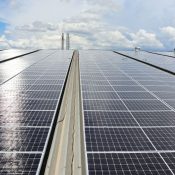
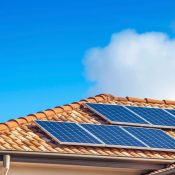
If your main house roof is small, shaded by trees, or facing the wrong way, an outbuilding roof can be the smarter home for solar panels.
Homeowners can install solar panels on a shed or outbuilding in Ireland, and in many cases the electricity can be wired back to feed the main house. Depending on the setup, the system may still qualify for the SEAI Solar Electricity Grant of up to €1,800, though the outbuilding must share the same MPRN as the home.
Below we walk through when it makes sense, what it costs, the grant rules, roof suitability, and the wiring side of things so you can make a proper decision before ringing an installer.
Can You Put Solar Panels on a Shed or Outbuilding in Ireland?
Yes, you can install solar panels on a shed, detached garage, workshop or outbuilding in Ireland. It is provided the structure is sound and the electricity connects back to the main property’s electrical system. The roof must be able to carry the load, and the cable run to the house consumer unit must be feasible.
In practice, we see this setup most often where the main house has:
- A north-facing or heavily shaded roof
- A small roof footprint that limits panel numbers
- Complex roof geometry, dormers or velux windows in the way
- A protected structure or planning restriction on the main dwelling
Detached vs Attached Outbuildings
An attached garage is straightforward. It usually shares the same electrical supply as the house, so wiring is short and simple.
A detached shed 20 or 30 metres down the garden is still doable, but the cable run gets longer, the trench work adds cost, and voltage drop needs to be designed for properly.
Do Solar Panels on a Shed Qualify for the SEAI Grant?
Solar panels installed on a shed or outbuilding can qualify for the SEAI Solar Electricity Grant, but only when the outbuilding is on the same property as the home and connects to the same MPRN (Meter Point Reference Number). The system must serve the domestic dwelling, not a separate business or metered unit.
The grant amounts stay the same regardless of where the panels sit:
- €700 per kWp for the first 2kWp
- €200 per kWp for the next 2kWp
- Maximum grant of €1,800 at 4kWp or above
The home must have been built and occupied before 2021, and the installer must be SEAI-registered with a Safe Electric certified electrician signing off the work. You can read the official criteria on the SEAI Solar Electricity Grant page for the full eligibility detail.
Where the grant does not apply is when the shed is a standalone commercial unit, a rental with its own separate meter, or a farm building tied to a different supply.
In those cases you may be looking at the Non-Domestic Microgen Grant or, for genuine farm use, TAMS 3 Solar Grant instead.
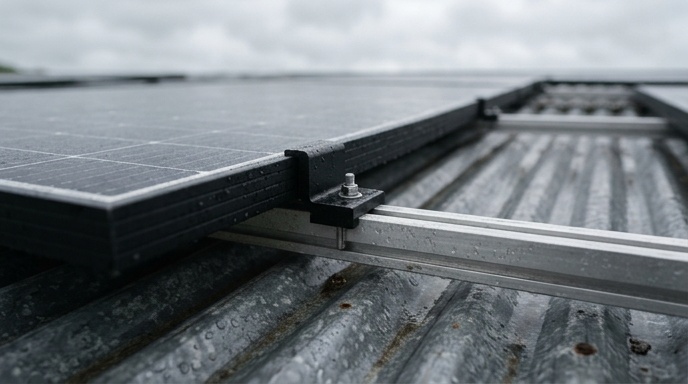
Is Your Shed Roof Actually Suitable?
Not every shed roof can take solar panels. Before anything else, the structure has to be assessed for strength, pitch, orientation and material. A proper site survey checks all of this, but there are a few things you can look at yourself first.
Structural Strength
A modern solar panel weighs roughly 20kg, and a typical residential system adds around 15 to 20kg per square metre to the roof, including the mounting rails. Purpose-built garages with proper rafters usually handle this without issue.
Roof Material and Mounting
Different roof types need different mounting systems. In Ireland, the common outbuilding roof types are:
- Slate or tile. Standard hooked mounting rails, same as any house roof.
- Corrugated metal or metal deck. Clamp-on brackets, no drilling required with the right system.
- Standing seam metal. Non-penetrative clamps, ideal for newer sheds.
- Flat roof. Either ballasted (weighted) or penetrative mounting depending on the deck.
Orientation and Shading
South-facing is ideal, but east and west orientations still produce roughly 80 to 85% of the output of a south-facing roof over a year. What kills generation more than orientation is shading.
Trees, chimneys on the main house, or a neighbouring building casting shadow across the shed roof will hurt output badly, especially in winter when the sun sits low.
How Much Do Solar Panels for a Shed Cost in Ireland?
A typical residential-sized solar system installed on a shed or outbuilding in Ireland costs a similar amount to installing on the house roof, before grant. Expect somewhere in the region of €6,000 to €10,000 for a 3kWp to 5kWp system, with the SEAI grant then reducing that by up to €1,800. Battery storage adds more if you want it.
The main cost variables specific to shed installations are:
- Cable run distance from the outbuilding to the main house consumer unit
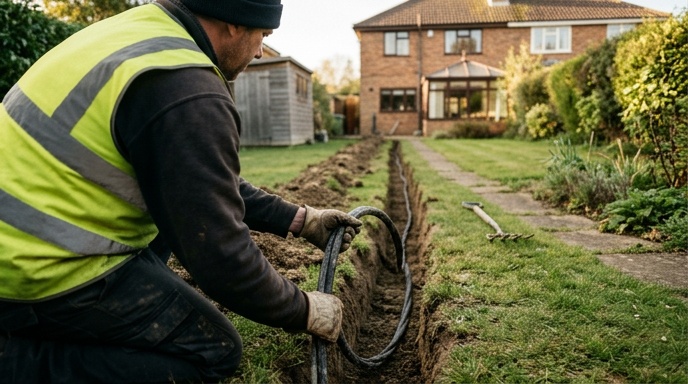
- Trenching if the cable needs to go underground through a garden or driveway
- Roof reinforcement if the shed structure needs strengthening
- Scaffolding access, which is sometimes trickier around outbuildings
For most standard back-garden setups with a solid garage or shed and a run of 10 to 20 metres to the house, the extra cost over a house-mounted install is modest. A proper free quote from solar installer will spell out these figures line by line.
How Does the Wiring From Shed to House Work?
Electricity generated on the shed roof travels through DC cables down to an inverter, which converts it to AC, then flows through an armoured cable back to the main house consumer unit. The house then uses that electricity first, exporting any surplus to the grid through the existing smart meter.
Where the Inverter Sits
The inverter can be mounted either in the shed itself or inside the house. Mounting it in the shed keeps DC cable runs short (which is safer and more efficient), then only AC needs to travel back to the house. Mounting it inside the house is sometimes preferred for easier access to the monitoring app and to keep the electronics in a stable, dry environment.
Cable Routing
The cable from the shed to the house is typically SWA (steel wire armoured) cable, buried at the correct depth in a trench, or clipped along an existing wall or fence line where practical.
It must be sized for the load and the distance to keep voltage drop within the limits set out in the Safe Electric Ireland wiring rules. A Safe Electric certified electrician will design this properly as part of the install.
Connection to the House Consumer Unit
At the house end, the cable terminates into a dedicated breaker in the consumer unit, protected and isolatable. The house then uses solar electricity in the exact same way as if the panels were sitting on its own roof.
The smart meter records import and export automatically, and any surplus exported earns you money under the Clean Export Guarantee tariff from your electricity supplier.
Do You Need Planning Permission for Solar Panels on a Shed?
In most cases, no. Solar panels on domestic sheds, garages and outbuildings are covered by the same exemptions as house-mounted solar under Irish planning law, provided the panels sit flush with or close to the roof plane and the outbuilding itself is a lawful structure.
Since 2022, Ireland has significantly relaxed planning requirements for domestic solar. The key points:
- No planning permission needed for most residential rooftop solar installations, including on outbuildings
- Panels must not project excessively above the roof
- Restrictions still apply near protected structures, in architectural conservation areas, and in certain solar safeguarding zones near airports
If you live in a conservation area, a protected structure, or close to an airport approach, check the current exemption rules with your local authority before committing. For everyone else, the outbuilding install is treated the same as any other domestic solar job.
Common Situations Where Shed Solar Makes Sense
Shed and outbuilding solar isn’t just for edge cases. Some very common Irish property setups are actually better suited to outbuilding installs than house-roof installs.
- Bungalows with low, shaded roofs.
- Period homes and protected structures.
- Properties with detached workshops.
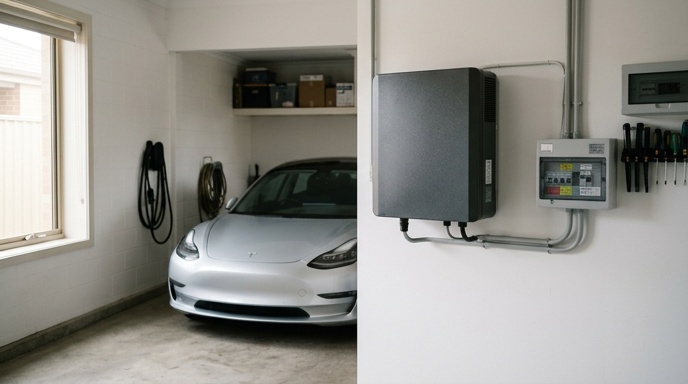
- Homes with EV chargers in the garage.
- Rural properties.
If any of these match your situation, it’s worth getting a proper survey done before assuming solar isn’t for you.
Our team can look at both the house and any outbuildings together and recommend the best roof for your setup. Get in touch with us to arrange a free site assessment and quote.