If you’ve got solar panels on your roof, or you’re thinking about getting them installed, there’s one piece of kit that ties the whole setup together: your smart meter. Without it, you can’t export surplus electricity to the grid. You can’t earn from the Clean Export Guarantee. And you’re leaving money on the table every single sunny day.
Smart meters and solar panels work hand in hand across Ireland. Once you have a smart meter installed by ESB Networks, your system can track how much electricity you’re generating, how much you’re using, and crucially, how much you’re sending back to the grid. That exported electricity earns you a payment from your energy supplier, typically around 18 to 24 cent per kWh depending on your tariff. It’s what turns a good solar investment into a brilliant one.
For homeowners already saving 60 to 70% on their electricity bills with solar, the smart meter adds another layer of return. And if you’re planning a new installation with a company like Going Solar, your installer will factor the smart meter into the whole process so everything works from day one. Let’s break down exactly how it all fits together.
How Do Smart Meters Work With Solar Panels?
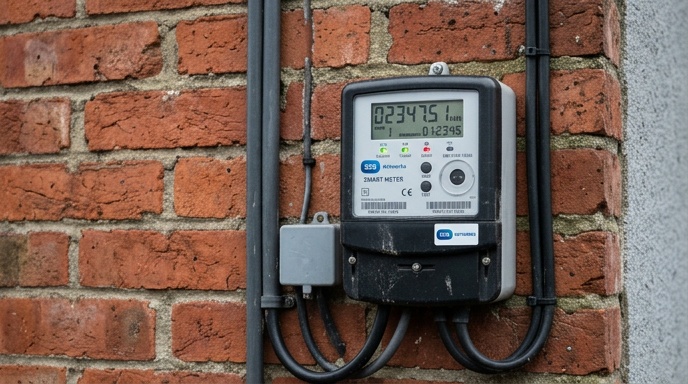
A smart meter replaces your old-style electricity meter. Instead of just recording total consumption, it measures electricity flowing in both directions. Power coming from the grid into your home, and power going from your solar panels out to the grid.
That two-way measurement is what makes solar exports possible. Your old analogue meter couldn’t distinguish between imported and exported electricity. A smart meter logs both, in 30-minute intervals, and sends that data digitally to ESB Networks. No manual reads needed.
Bi-Directional Metering Explained
When your solar panels produce more electricity than your home is using at that moment, the surplus flows outward. The smart meter records this as an export. Your energy supplier then credits you for those exported units under whatever microgeneration scheme or Clean Export Guarantee tariff you’re signed up to, and this is where real savings start to stack up.
Real-Time Monitoring Benefits
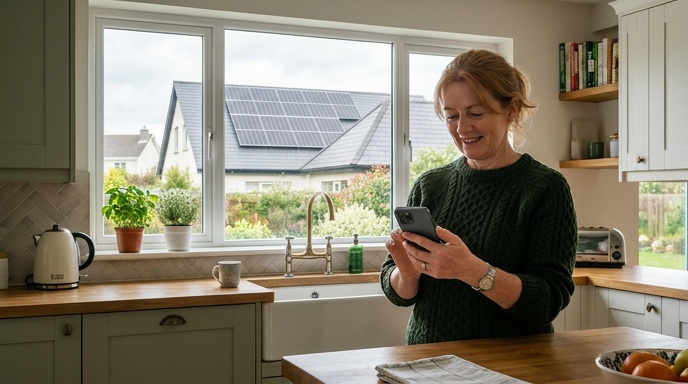
Most modern solar systems come with a monitoring app. When paired with a smart meter, you get a full picture of your energy profile. Going Solar, for instance, sets up monitoring apps during installation so homeowners can see generation, consumption, and export data on their phone. It helps you figure out the best times to run heavy appliances like dishwashers or washing machines, maximising what you use directly from your panels rather than pulling from the grid.
Do You Need a Smart Meter Before Getting Solar Panels?
No, you don’t need a smart meter installed before your solar panels go up. But you will need one to access export payments.
ESB Networks is rolling out smart meters across Ireland as part of a national programme. If you haven’t been upgraded yet, you can request one directly from ESB Networks. There’s no charge for the standard smart meter installation.
Here’s the practical sequence most homeowners follow:
- Get your solar panel system designed and installed by an SEAI-approved installer
- Ensure your smart meter is installed (or request one from ESB Networks if not already fitted)
- Register with your electricity supplier for a microgeneration or Clean Export Guarantee tariff
- Start earning for every unit of surplus electricity your panels send to the grid
Your solar installer handles a lot of the related paperwork. Going Solar, for example, manages the full SEAI grant application and associated documentation on behalf of homeowners, which takes the headache out of the admin side of things. The smart meter request itself is straightforward and sits with ESB Networks.
What Happens to Exported Electricity Without a Smart Meter?
If you have solar panels but no smart meter, your system still works perfectly well. Your panels generate electricity, your home uses it, and you reduce your grid dependency during daylight hours.
But here’s the catch. Any surplus electricity your panels produce gets sent to the grid for free. Your old meter can’t measure it, so your supplier can’t pay you for it. You’re essentially donating clean energy to the national grid without any financial return.
Once a smart meter is fitted, those exports get logged and credited. For a typical Irish home with a well-sized solar system, export income can add a few hundred euro per year on top of the bill savings you’re already making. It’s not a fortune, but over the 25-plus year lifespan of your panels, it adds up significantly.
How Much Can You Earn From Solar Exports With a Smart Meter?
Export rates vary by supplier. As of early 2026, most Irish energy companies offer somewhere between 18 and 24 cent per kWh for exported solar electricity under the Clean Export Guarantee. Some suppliers offer fixed rates while others adjust seasonally.
Typical Export Earnings
For a standard residential system (say 4kWp, which is common for a three or four-bed home), you might export around 1,500 to 2,500 kWh per year depending on your household’s consumption patterns. At 20 cent per kWh, that’s roughly €300 to €500 annually in export income alone, on top of the savings you’re already making on your electricity bills.
Maximising Your Returns
Battery storage changes the equation further. With a battery system paired with your solar panels, you can store surplus energy for use in the evening rather than exporting everything during the day. This means you use more of your own solar electricity when rates are highest, and export only what you genuinely don’t need. It’s a balancing act, and the right setup depends on your household’s energy habits.
Will ESB Networks Automatically Install a Smart Meter?
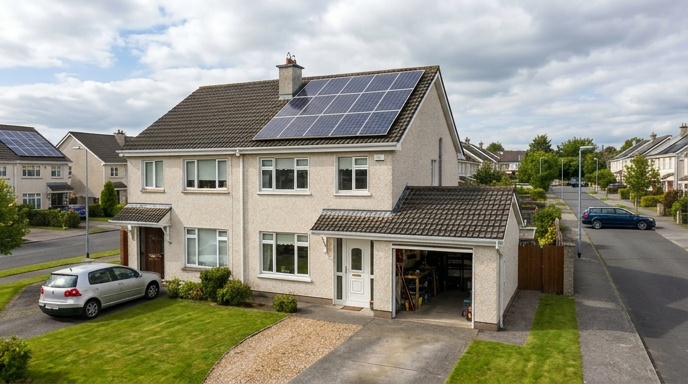
ESB Networks has been rolling out smart meters since 2019 as part of a national programme. They’re aiming to replace every meter in the country, but it’s a phased rollout. Some areas have been done already. Others are still waiting.
If your area hasn’t been reached yet and you want a smart meter for your solar system, you can contact ESB Networks directly to request an early installation. Homeowners with solar panels are generally prioritised in the queue because the meter is needed for microgeneration registration.
Once fitted, the meter is owned and maintained by ESB Networks. You don’t pay a recurring charge for it. Your electricity supplier accesses the data to calculate both your consumption and your export credits.
Can You Get the SEAI Solar Grant Without a Smart Meter?
Yes. The SEAI solar grant of up to €1,800 for residential installations has nothing to do with whether you have a smart meter or not. The grant is based on your system size and is paid directly to your bank account after installation and verification by SEAI.
To qualify, your home must have been built and occupied before 2021, and the installation must be carried out by an SEAI-approved, Safe Electric registered installer. Going Solar ticks both boxes, holding SEAI approval, Safe Electric registration, and ISO 9001 quality certification through their parent company, the Resolute Engineering Group.
The smart meter becomes relevant only when you want to start earning from exports. So you can absolutely get your panels installed, claim your grant, and start saving on bills immediately. Then when your smart meter is fitted, the export income kicks in as a bonus.
Choosing Between Self-Consumption and Export
There’s no single right answer here. Some homeowners prefer to maximise self-consumption by adding battery storage and shifting heavy usage to daylight hours. Others are happy to export more and collect the payments.
In practice, most homes end up doing a bit of both. You use what you can during the day, store some in a battery if you have one, and export the rest. A well-designed solar system takes all of this into account before a single panel goes on the roof.
Going Solar’s approach is to design each system around the specific property, factoring in roof orientation, shading, household energy patterns, and whether battery storage makes financial sense. With over 8,000 residential installations completed across Ireland, they’ve seen pretty much every scenario going. That engineering-led process, backed by the Resolute Engineering Group, means your system is sized to actually match how you live, not just a generic package thrown on the roof.
Getting Started With Solar and Smart Metering
If you’re considering solar panels for your home, the smart meter piece is straightforward. Get your system installed by a certified professional, request a smart meter if you don’t already have one, and register with your supplier for export payments.
Going Solar handles the consultation, custom system design, SEAI grant application, and full installation, typically completed in a single day for residential properties. With 5 stars on Trustpilot from over 150 reviews and 166-plus Google reviews, they’ve built a track record that speaks for itself. If you want to see what solar could save you, their online solar calculator gives a quick estimate before you even pick up the phone.