Solar savings in winter are real but smaller than summer, with most Irish homes still trimming a meaningful chunk off their electricity bills through the darker months. Panels keep producing in low light, just at a reduced rate, so the savings scale down rather than stopping.
A typical home might see winter output drop to roughly a fifth of its peak summer generation. You won’t run the house on sunshine alone in January, but the panels still offset daytime use and ease the sting of higher winter bills.
Below we break down what actually happens to solar production from November to February, what you can expect to save, and the small changes that stretch every unit you generate.
How Much Do Solar Panels Save in Irish Winter?
Solar panels in an Irish winter typically generate around 15% to 25% of their summer peak, so your bill savings shrink proportionally rather than disappearing. A system saving you heavily in June will still cover a share of daytime electricity in December, just a smaller one.
The exact figure depends on your system size, roof orientation, shading and how much power you use during daylight. Homes that run appliances in the middle of the day capture far more of the limited winter sun.
- Shorter days mean fewer generating hours, often five or six usable hours versus sixteen in summer.
- Low sun angle and cloud cover reduce the intensity hitting the panels.
- Diffused light on overcast days still produces power, just at a lower output.
- A battery lets you store what little you make and use it after dark.
If you want to model your own numbers across the seasons, it helps to run them for your specific roof and usage pattern.

Why Does Solar Output Drop in Winter?
Solar output drops in winter mainly because of fewer daylight hours and a lower sun angle, not the cold itself. Panels actually work slightly more efficiently in cooler temperatures, so the real limit is the amount of light reaching them, not the temperature of the air.
Three things combine to cut generation between November and February.
- Daylight hours fall to around seven and a half hours at the solstice, against roughly seventeen in June.
- The sun sits low on the horizon, so light travels through more atmosphere and hits panels at a shallow angle.
- Heavier cloud cover scatters sunlight, reducing the direct radiation that drives peak output.
You can see Ireland’s seasonal daylight swing in the official Met Éireann climate data, which shows why generation tracks the light rather than the thermometer.
Does Cold Weather Damage Solar Panels?
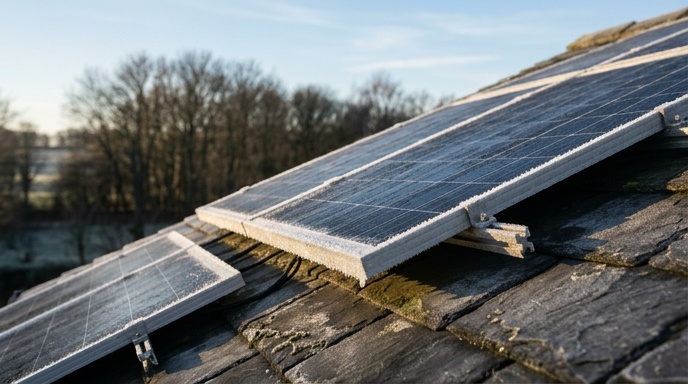
No, cold weather does not damage solar panels, and frost or snow rarely causes lasting harm. Panels are tested to withstand Irish conditions, including wind, rain and temperature swings. A light dusting of snow usually slides off a pitched roof and panels often warm enough to clear themselves.
Do Solar Panels Work on Cloudy Days?
Yes, solar panels work on cloudy days by capturing diffused light that passes through the cloud. Output drops compared with bright sun, often to a quarter or less of peak, but it does not fall to zero. On a grey Irish afternoon your system still trickles power into the house.
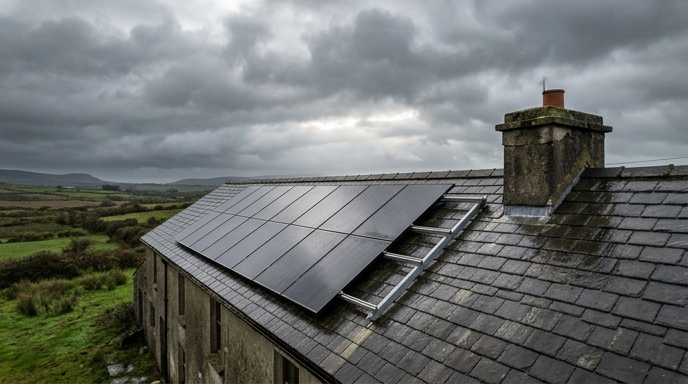
What Winter Solar Generation Looks Like Across the Year
Winter solar generation in Ireland sits at the bottom of a strong seasonal curve, with the darkest months producing a fraction of the summer total. Most annual output lands between April and September, so winter is about trimming bills rather than wiping them out.
The rough monthly pattern below shows how a typical domestic system spreads its output across the year. Treat these as indicative shares, since your roof and system size change the real figures.
| Season | Months | Share of Annual Output |
|---|---|---|
| Winter | Nov to Feb | Around 10% to 15% |
| Spring | Mar to May | Around 30% |
| Summer | Jun to Aug | Around 40% |
| Autumn | Sep to Oct | Around 15% to 20% |
Even in the leanest months, the panels keep working. A sunny, crisp December morning can deliver a surprisingly healthy spike, and every unit generated is a unit you don’t buy from the grid.
How to Get the Most From Solar in Winter
To get the most from solar in winter, shift as much electricity use as possible into daylight hours and store the surplus for the evening. Because generation is limited, the goal is to use what you make directly rather than exporting it cheaply and buying it back after dark.
A few practical habits make a real difference through the colder months.
- Run the dishwasher, washing machine and dryer during midday light.
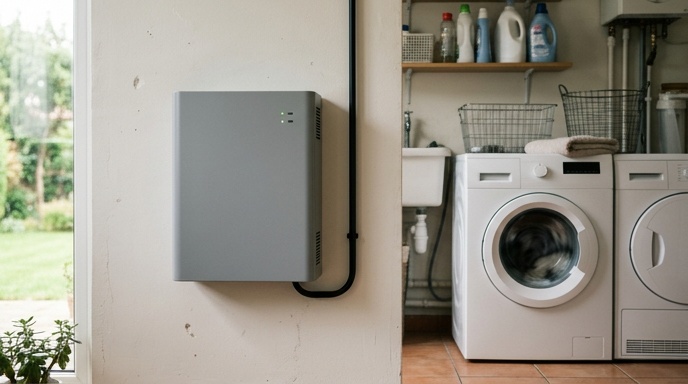
- Fit a battery so stored solar covers the evening peak instead of the grid.
- Use a timer or the monitoring app to line heavy loads up with sunny spells.
- Keep panels clear of leaves and debris after autumn storms.
- Angle a new install for lower winter sun if winter use matters most to you.
An engineering-led design matters here, because panel angle, orientation and battery sizing decide how much winter light you actually capture. If you’re weighing up a system, a proper survey of your roof and usage is where the real gains come from.
Is Solar Still Worth It in Ireland Given the Winters?
Yes, solar is still worth it in Ireland despite the winters, because savings are measured across the full year, not month by month. The strong spring and summer output carries the annual figure, while the 0% VAT on domestic installs and the SEAI grant improve the overall payback.
Irish homeowners typically see bills fall by a meaningful share across the year, with payback often landing in the region of five to seven years depending on system size and usage. Winter simply flattens the curve, it doesn’t break the case for going solar.
- Grant support reduces the upfront cost, improving the long-term return.
- Export payments mean summer surplus earns money that offsets winter grid use.
- A BER rating improvement can lift the value of your home.
You can check the current domestic grant amounts and eligibility on the official SEAI Solar Electricity Grant page before you budget. For the full picture on what’s available, the team keeps a plain-English breakdown of the solar grants on offer, and you can also read how a home solar system is designed around Irish conditions.
Winter won’t carry your savings, but a well-sized system still pays its way through the darker months. To see what your own roof could produce across every season, get a free quote from the team here and we’ll size it around how you actually use power.