A solar PV system makes direct current electricity from daylight, an inverter turns it into the alternating current your home uses, and solar battery storage holds whatever you do not use right away so you can draw on it after dark.
Without a battery, most of that midday surplus flows to the grid for a small export payment. With one, you keep it and use it in the evening when demand and prices peak.
Since 6 October 2026 there is also a flat €600 SEAI grant toward a home battery of 5 kWh or more. This guide covers how the parts work together, what a battery changes day to day, and how to size one for your home.
How Does a Solar Battery Store and Release Your Energy?
A solar battery sits between your panels and your home, charging on surplus daytime generation and discharging it back once your panels stop producing. A hybrid inverter manages the flow, sending power first to your appliances, then to the battery, and exporting only what is left once the battery is full.
Here is the path your electricity takes through a system with storage.
- Generation. Panels produce DC electricity whenever there is daylight, even under Irish cloud.
- Conversion. The inverter converts DC into the 230V AC your sockets, lights and appliances run on.
- Prioritised supply. Your home draws what it needs first, so you use free solar before anything else.
- Charging. Surplus power charges the battery instead of being exported cheaply.
- Discharging. After dark, or through a dull spell, the battery feeds stored power back to the house.
- Management. The control system regulates charge rates, temperature and depth of discharge to protect the cells.
Hybrid Inverters and Adding a Battery to an Existing System
You can fit a battery at the same time as your panels or add one later to a system you already own. Which route you take comes down to your inverter.
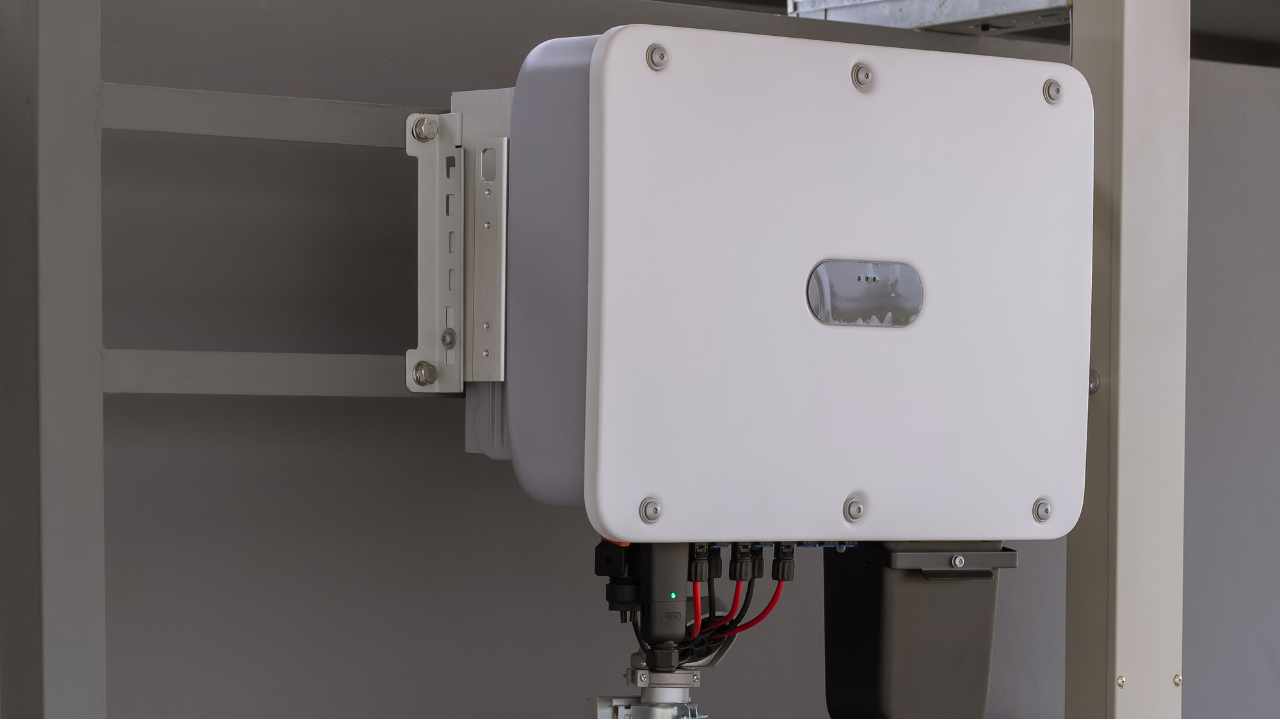
A hybrid inverter runs the panels and battery through one unit, the tidiest option for a fresh install. If you already generate your own power, adding a battery to an existing system is usually done with an AC-coupled unit that brings its own inverter, so your current panels and wiring stay in place.
What the Battery Management System Does
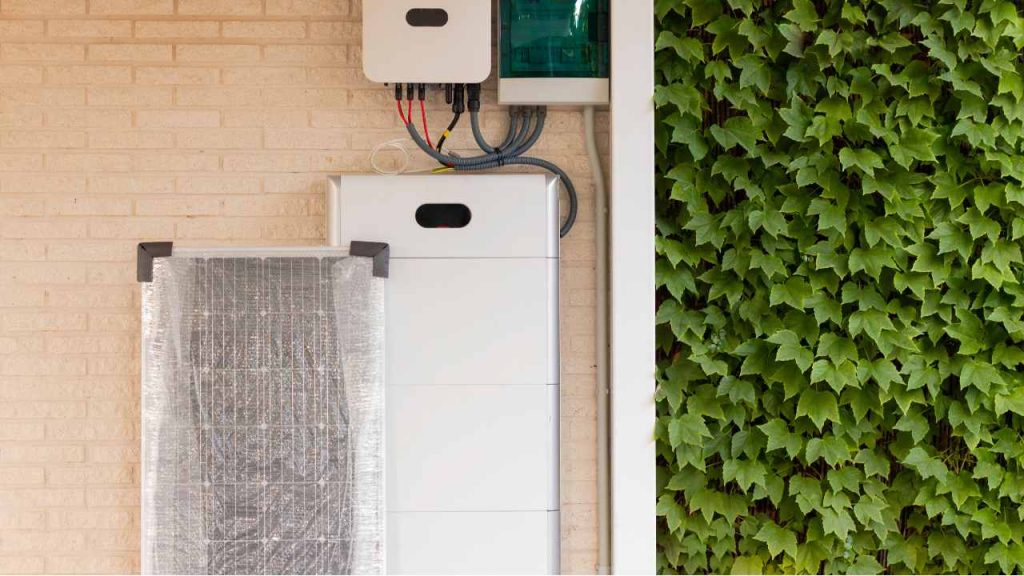
The battery management system is the built-in controller that keeps the battery safe and running efficiently. It balances the cells, limits how far the battery drains, and manages temperature and charge speed.
This is what lets a modern lithium battery cycle daily for years. Most home batteries are rated for thousands of cycles and keep roughly 70% of their capacity after ten years, which is why depth of discharge and temperature control matter so much.
What Battery Storage Changes for an Irish Home
Battery storage changes how much of your own solar you actually use. A home without storage typically uses only a portion of what its panels make, because peak generation happens around midday when the house is often empty. A battery captures that surplus so you lean on the grid far less, especially through the dark evening hours.
The practical gains show up in a few ways.
- You use more of your own daytime power instead of exporting it for a few cent per unit.
- Stored solar covers the costly teatime peak, which lowers your evening bills.
- A backup-capable setup can keep essentials running through a power cut.
- You import less from the grid, which softens the blow of future rate rises.
What the €600 SEAI Battery Grant Covers
Since 6 October 2026, the SEAI offers a flat €600 grant toward a home battery storage system of 5 kWh or larger. Batteries below 5 kWh do not qualify. The SEAI sets out the full terms in its official battery grant guidance, and the headline conditions are straightforward.
To qualify, a few conditions apply.
- The home must have been built and occupied before 2025.
- The battery must be 5 kWh or larger.
- An SEAI-registered solar company must carry out the work.
- The grant offer must be in place before the installation begins.
You can claim it on its own or alongside the solar PV grant in a single application, and it also covers a battery added to a system you already own. A good installer will handle the SEAI paperwork for you, and our guide to the battery grant covers the claim step by step.
How Much Battery Storage Does an Irish Home Need?
Most Irish homes are well served by a battery of 5 to 10 kWh, which covers an evening and overnight without the panels running. The right size depends on your daily electricity use, how much your panels generate, and whether you run heavy loads like an EV charger or a heat pump.
As a rough guide, usage tends to line up like this.
| Household profile | Typical daily use | Rough battery size |
| Smaller home, two adults | Lower consumption | Around 5 kWh |
| Average family home | Moderate consumption | 5 to 8 kWh |
| Larger home with EV or heat pump | Higher consumption | 8 to 10 kWh or more |
These are starting points, not fixed rules. Sizing too small wastes surplus you could have stored, while sizing too big means paying for capacity you rarely fill. Because the SEAI grant starts at 5 kWh, a homeowner sizing for the grant is usually already in the right band for a typical household, and our guide on what size battery your home needs goes into more detail.
Getting the Most From Solar and Battery Storage
Battery storage turns a solar PV system from a daytime-only saver into one that works around the clock. The panels generate, the inverter converts, and the battery holds the surplus so your home keeps running on its own power into the evening.
With the €600 SEAI grant now in place, the step up from panels alone has never cost less. To see what a system with storage could save on your own bills, you can estimate your savings with our solar calculator in a couple of minutes.ystem with storage could save on your own bills, you can estimate your savings with our solar calculator in a couple of minutes.