For most commercial buildings in Ireland, the best commercial solar panels right now are N-type TOPCon monocrystalline modules in the 500W-plus class. Specify them as glass-glass and bifacial wherever light can reach the back of the panel. That covers most warehouses, offices, retail units and farm buildings with a sound roof.
The exception is the roof itself. A metal or sandwich panel warehouse roof with little spare load capacity changes the answer. So does a flat roof with a combustible membrane, or a site with room for a ground mount or carport.
This guide works through that decision roof by roof. It then covers the specs, warranties and survey questions that separate a strong quote from a weak one.
Which Solar Panel Type Is Best for Commercial Buildings in 2026?

N-type TOPCon is the default choice for Irish commercial roofs in 2026. It beats the older PERC standard on efficiency and degradation at little or no price premium, and every major manufacturer now builds it at scale.
HJT edges TOPCon on performance but costs more and comes from a smaller pool of suppliers. Polycrystalline panels have largely left the market, so treat any quote built on them as dated.
| Cell type | Typical commercial use | Module efficiency | Strengths | Watch-outs |
| N-type TOPCon | Most rooftops, ground mounts and carports | 22 to 24% | Best value per watt, low degradation, widely available | Quality varies by manufacturer, so check datasheet and warranty |
| N-type HJT | Tight roofs where every watt counts | 23 to 25% | Lowest degradation, strong low-light output, high bifaciality | Price premium, fewer suppliers |
| PERC (P-type) | Older installs and budget quotes | 20 to 22% | Lowest cost per panel | Faster degradation, being phased out by most factories |
For a fuller explanation of how each cell technology works, see our breakdown of the main types of commercial solar panels.
A one-point efficiency gain matters most where roof area caps the system size. Where space is plentiful, cost per watt, degradation and warranty strength decide the better buy.
How to Match Commercial Solar Panels to Your Roof Type
Roof type decides the panel and mounting more than any brand does. A standard N-type module suits most commercial roofs.
Three things change between a metal shed roof, a flat membrane roof, open ground and a carport. They are the weight the system adds, how it fixes down and whether bifacial gain is realistic.
| Roof or site | Recommended panel | Mounting | Main watch-out |
| Metal deck or standing seam warehouse | Framed N-type TOPCon, 500W-plus class | Rails or seam clamps | Purlin capacity |
| Sandwich panel (composite) roof | Standard or lightweight, depending on load | Rails or bonded system | Insurer fire requirements, low spare load |
| Flat membrane roof | Bifacial TOPCon over a light membrane | Ballasted or mechanically fixed | Ballast weight, membrane warranty |
| Ground mount | Bifacial glass-glass TOPCon or HJT | Fixed-tilt ground frame | Planning and grid connection |
| Carport | Bifacial glass-glass | Steel canopy | Higher structural cost per kWp |
Solar Panels for Metal and Sandwich Panel Warehouse Roofs
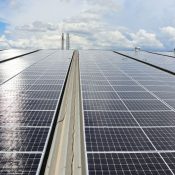
Framed TOPCon modules suit most metal warehouse roofs, provided the purlins have spare capacity. Standing seam roofs take clamp-on fixings with no drilling. Trapezoidal deck uses short rails fixed through the sheet.
Sandwich panel roofs need more care. Many have insulated cores that insurers treat as a fire risk. The roof may also have been designed with little margin above its original loads.
Solar Panels for Flat Commercial Roofs
Flat roofs usually take tilted modules on a ballasted frame, which holds down under its own weight with no penetrations. That protects the waterproofing but adds significant dead load. Where the roof can’t carry it, a mechanically fixed system is used instead, with every fixing sealed into the membrane.
Ground-Mounted and Carport Solar for Business Sites
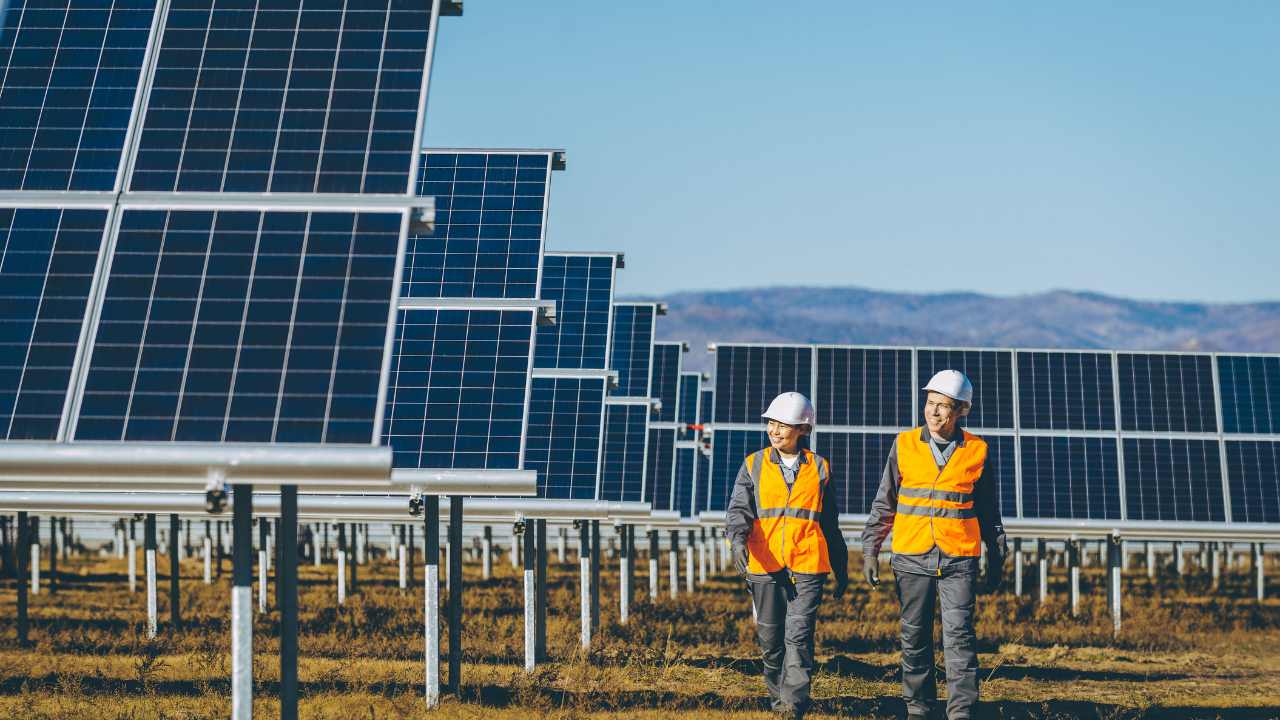
Ground mounts and carports are where bifacial glass-glass modules earn their keep. Panels sit higher, rows are spaced out and there’s no roof load limit, so the largest-format modules can be used. Planning, grid connection and steelwork become the main questions instead.
Lightweight Solar Panels for Commercial Buildings With Low Roof Load
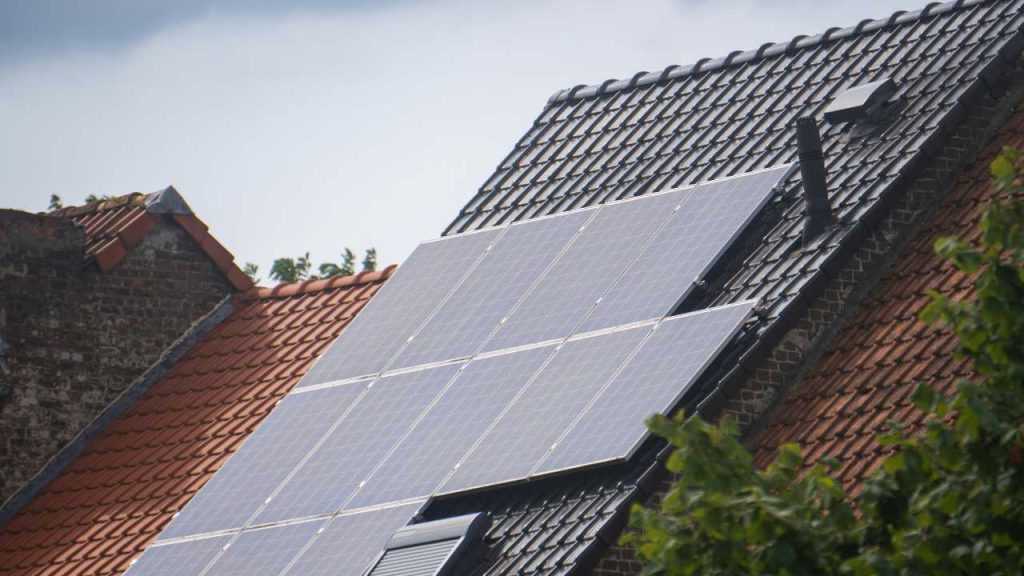
Lightweight solar panels are the answer when a commercial roof can’t carry standard modules. They replace the front glass and aluminium frame with polymer layers, cutting weight sharply.
Most bond straight to the roof surface instead of sitting on rails. They suit a specific set of buildings:
- Older industrial units with light steel purlins and no spare capacity
- Long-span sandwich panel roofs where rail fixings would puncture the insulated skin
- Curved or low-pitch roofs that won’t take a tilted frame
- Flat roofs where ballast would push the structure past its load limit
The trade-offs to weigh before choosing one:
- Lower wattage per square metre than glass modules, so less output from the same roof
- Product warranties that are often shorter than standard glass modules carry
- Bonded systems tied to the remaining life of the roof covering underneath
- Fire ratings and insurer acceptance that vary more from product to product
Where a survey shows some spare capacity, a standard framed module on light rails is often the better long-term buy.
Are Bifacial Solar Panels Worth It for a Business in Ireland?
Bifacial panels are worth it when light can reach the rear of the module. That means ground mounts, carports and tilted arrays over a light flat roof. On a flush-mounted metal roof the rear gain is small, though glass-glass bifacial modules still bring durability benefits.
| Mounting and surface below | Typical rear-side gain |
| Flush-mounted on a dark roof | About 2 to 5% |
| Ground mount over grass | About 8 to 13% |
| Over white gravel, concrete or light membrane | 15% or more |
Those ranges depend on mounting height, row spacing and how clean the surface stays. Treat any installer projection above them with caution and ask how it was modelled.
Which Commercial Solar Panel Specs Matter Most on a Datasheet?
Degradation rate, wattage class and build quality matter most on a commercial datasheet in Ireland. Temperature coefficient gets heavy attention in US and Australian guides. Irish panels rarely run hot enough for small differences to move annual yield much.
- Wattage class: Commercial-format modules commonly run above 500W. Fewer, larger panels cut mounting and labour per kWp if the roof layout suits them.
- Degradation rate: TOPCon typically loses about 0.30 to 0.40% a year, against 0.45 to 0.55% for PERC. Over 25 years that gap compounds into real lost output.
- Temperature coefficient: Around -0.30%/°C for TOPCon and -0.24%/°C for HJT. It’s a useful quality marker and a minor factor in Irish yield.
- Glass-glass construction: Two glass layers resist moisture and microcracking better than a polymer backsheet, which suits wet, windy sites. They also weigh more.
- Fire classification: Ask for the module and system fire rating, because your insurer will.
For a neutral overview of how PV modules turn light into electricity, the SEAI guidance on electricity from solar is a good reference before you compare datasheets side by side.
How Long Do Commercial Solar Panels Last and Which Warranty Matters?
Commercial solar panels typically produce for 25 years or more, and the performance warranty is what protects that output. The product warranty covers defects in the panel itself and usually runs for a shorter term, so check both numbers on every quote.
| Warranty | What it covers | What to check |
| Product warranty | Defects in materials and manufacture of the module | Length in years and who handles claims in Ireland |
| Performance warranty | Guaranteed minimum output across the term | First-year loss, annual loss rate and output at end of term |
The annual loss rate in the performance warranty should line up with the datasheet degradation figure. A warranty is only as strong as the company behind it. That’s why a bankable, financially stable manufacturer matters more than a few extra watts.
Our own-brand Topco panel carries a 25-year warranty and was designed for Irish rain, wind and humidity.
Does a Commercial Roof Need a Structural Survey Before Solar Goes On?
Yes, every commercial roof should have a structural survey before solar goes on. Panels, rails and any ballast add permanent load, and wind adds uplift on top. An engineer confirms the roof can carry both, then the mounting is designed around what the survey finds.
A good survey checks:
- Spare load capacity in the purlins, rafters or roof deck
- Condition and remaining life of the roof covering
- Wind exposure, including edge zones where uplift is highest
- Fixing points for a mechanically fixed system, or ballast limits for a ballasted one
- Fire separation, access routes and cable paths
The result decides between ballasted and mechanically fixed mounting on a flat roof. On a weak roof, it also decides between standard and lightweight panels. It shapes the price too, which our guide to commercial solar panel costs covers in more detail. Engineering-led design starts with this step, and weaker quotes tend to skip it.
Questions to Ask a Commercial Solar Installer in Ireland
Ask any installer to show that the panel, the roof and the paperwork all stack up before you sign. The right questions expose generic quotes, skipped surveys and grant assumptions that predate the October 2026 changes.
Current scheme terms are published on the SEAI Non-Domestic Microgen Grant page, and they should match what any installer tells you.
- Which manufacturer and model is quoted? Ask for the datasheet and evidence the manufacturer is bankable.
- Who backs the warranty in Ireland? A claim should have a named route here.
- Has a structural engineer surveyed the roof? Ask to see the load calculation.
- Has your insurer signed off? Many insurers assess rooftop PV against fire guidance such as RC62, a code of practice produced with insurer input.
- Is the company SEAI-registered and the electrical work Safe Electric certified? Both are needed for grant support and a compliant install.
- How does the grant change the numbers? Ask how the current commercial solar grant applies to your system size and timing, then check it against SEAI.
Choosing Commercial Solar Panels for Your Building
Start with the roof, then choose the panel. For most Irish commercial buildings that means N-type TOPCon, glass-glass and bifacial where the site allows. Lightweight systems are for roofs that can’t take anything heavier.
If you’re weighing up panels for a warehouse, office or industrial unit, our commercial solar installation team will survey the roof, check the load and design a system around what it can carry.